Introduction
Thinking about buying a home or investing in Dubai real estate in 2026? You are part of a big wave.

The market here is still going strong. Reports show that Dubai yields stay among world’s highest as GCC property surge rolls into 2026 with average rental returns between 6% and 8%.
But let’s talk about the elephant in the room. The moment you start talking to agents, you will likely ask yourself: what’s the commission for a real estate agent?
It is a fair question. The truth is, the commission for a real estate agent in Dubai is not always straightforward. You hear different numbers from different people. And when you add in the specific dubai property laws that govern these transactions, it is easy to feel lost.
Many buyers struggle because they don’t understand where their money goes. Is the fee standard? Can you negotiate it? What do you actually get for it?
Understanding the commission structure is just one piece of the puzzle. You also need to know what an agent does to earn that fee. If you are unsure, our 2026 guide to their role and value explains everything clearly.
This guide is here to help you navigate the confusion. We are cutting through the rumors and giving you a clear, practical look at what it really costs to buy property in Dubai in 2026. You will learn exactly how agent fees work and get a solid grasp of the property law in Dubai that affects your wallet.
Ready to find the right person to guide you? Start by learning how to hire a luxury real estate agent in Dubai in 2026.
What Is the Real Estate Agent Commission in Dubai?
Here is the simple answer most people want. In 2026, the commission for a real estate agent in Dubai is typically 2% of the property purchase price for the buyer’s agent. If you are buying a home for AED 1 million, you will pay around AED 20,000 in commission plus VAT.
Now, here is where it gets a bit more detailed. The total commission paid in a transaction is usually 4% split between both sides. The seller also pays 2% to their listing agent. But as a buyer, your agent will ask you for their fee at the time of signing the sale agreement.
You should know that dubai property laws keep things fair. The Real Estate Regulatory Authority (RERA) sets clear rules around commissions to protect everyone involved. This means you will not face hidden fees or surprise charges. The law requires the commission to be stated clearly in your contract.
According to recent data, buyer agent fees in Dubai typically fall between 1% and 2.5% depending on the property type and the brokerage you choose. Premium agencies handling luxury listings may charge on the higher end. Off-plan properties sometimes come with lower or even zero commission if you buy directly from the developer.
Here is a quick breakdown of what you can expect to pay in 2026:
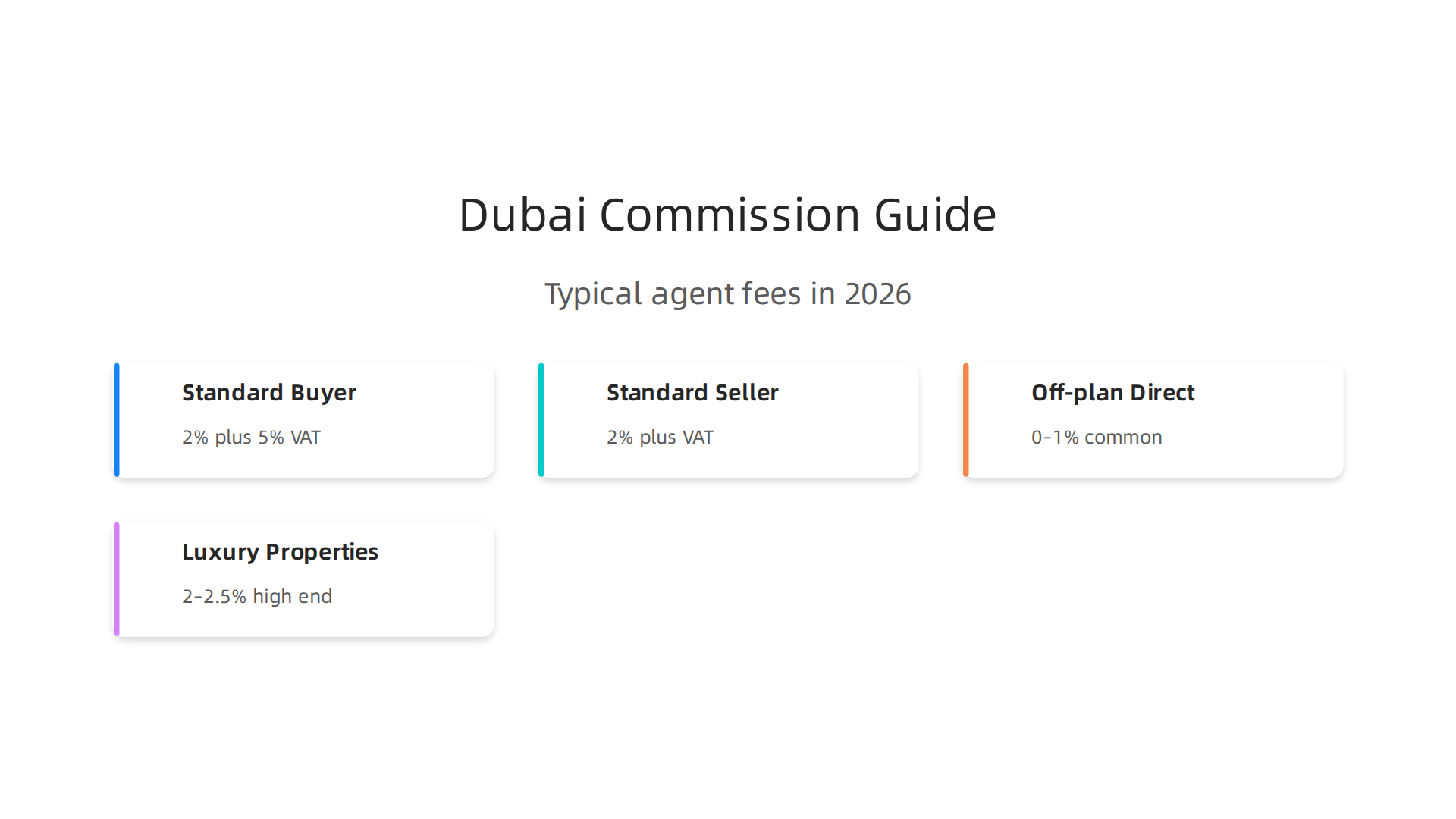
- Standard buyer commission: 2% of the sale price plus 5% VAT
- Standard seller commission: 2% of the sale price plus VAT
- Off-plan / direct deals: 0% to 1% in many cases
- Luxury / premium properties: 2% to 2.5% on the high end
So when you ask yourself what’s the commission for a real estate agent in Dubai, the short answer is 2% for the buyer. But understanding the full picture will save you from surprises.
If you want to know exactly what you are paying your agent for, check our 2026 guide to their role and value. It walks through every service you get in return for that fee.
How to Negotiate Agent Commissions Without Losing the Deal
You know the standard rate. Now for the good news. In 2026, you can often negotiate the commission for a real estate agent in Dubai. The 2% figure is a common starting point, but it is not a fixed law set by dubai property laws. Many brokers are willing to adjust their fees, especially on larger or luxury deals.
Here is how you can approach the conversation without ruining the relationship.

Try a Flat Fee Instead of a Percentage
One smart move is to offer a flat fee. If the property is high-value, a flat amount can save you thousands compared to a percentage. Agents sometimes prefer this too because it guarantees their income no matter the final sale price.
Tie the Commission to Results
You can also link the payment to specific goals. For example, you might agree to the full 2% if the agent gets you a price above your target. But if the property sells at a lower price, the commission drops. This aligns their work with your best interests.
Know When to Hold Firm and When to Give In
Pushing too hard can backfire. If an agent has a proven record and a strong marketing plan, paying a fair rate makes sense. You are paying for their skills, their network, and their time. If you are working with a top agency, remember that their services often justify the fee.
The realistic range for agent fees in Dubai spans from 0% for off-plan deals to about 2.5% for premium brokerages (source). So do your research. And if you want to know what separates a great agent from the rest, read our guide on how to hire a luxury real estate agent in Dubai in 2026. It will help you spot the ones truly worth their price.
Keep the conversation friendly. A successful negotiation leaves both sides happy. And a happy agent works harder for you.
Key Property Laws Every Dubai Buyer Must Understand
You negotiated your agent’s fee. Great. But what’s the commission for a real estate agent worth if you don’t know the legal ground you stand on? Understanding the rules protects your money and your peace of mind.
Dubai’s property market runs on a civil law system. That is different from the common law used in the UK or the US. So some things may feel unfamiliar at first.
Here is the most important thing to know. Foreigners can own property in Dubai. But not everywhere. Since 2002, Dubai has allowed full foreign ownership in designated freehold areas. These are specific communities like Palm Jumeirah, Dubai Marina, and Downtown Dubai. In these zones, you can buy, sell, and lease just like a local. The right is backed by the real property law. You can learn more about the history and rules of freehold ownership from Rubert Partners.
It is just as important to know where you cannot buy. Outside freehold zones, only UAE nationals can own the land. If you are an expat, you must stick to the allowed areas. Check the official list before you get your heart set on a villa in a non-freehold district. Buying in the wrong zone can lead to major headaches. A guide on non-freehold areas in Dubai explains the restrictions clearly.
Two main bodies enforce these rules. The Real Estate Regulatory Agency (RERA) and the Dubai Land Department (DLD). RERA sets the standards for developers and agents. It handles disputes and makes sure everyone follows the law. The DLD registers all property transactions. This is where you pay your transfer fees and get your title deed. These two organizations give you protection. They make Dubai a safe place to invest compared to many other markets.
If you are a foreign buyer, you also have to think about your residency options. Buying property worth a certain amount can qualify you for a residency visa or even a Golden Visa. The legal steps for foreigners are straightforward but you need to follow them exactly.
Once you understand the laws, you will see how a good agent adds value. An experienced pro knows the freehold zones, the registration process, and the legal hoops. That is part of why they earn their commission for real estate agent. If you want to see what a top agent does behind the scenes, read our guide on the role and value of a real estate agent in Dubai in 2026.
And when you are ready to pick a premium property, check out our insights on luxury property in Dubai 2026 and why branded residences are top investments.
Knowing the law puts you in control. It takes the guesswork out of the deal. So before you sign anything, make sure you understand these key rules. Your investment will thank you.
Step-by-Step Legal Process: From Offer to Ownership
You now know the rules of the game. You understand freehold zones, the role of RERA, and the DLD. So how does a real deal actually happen? Let’s walk through the three main steps that take you from an offer to full ownership.
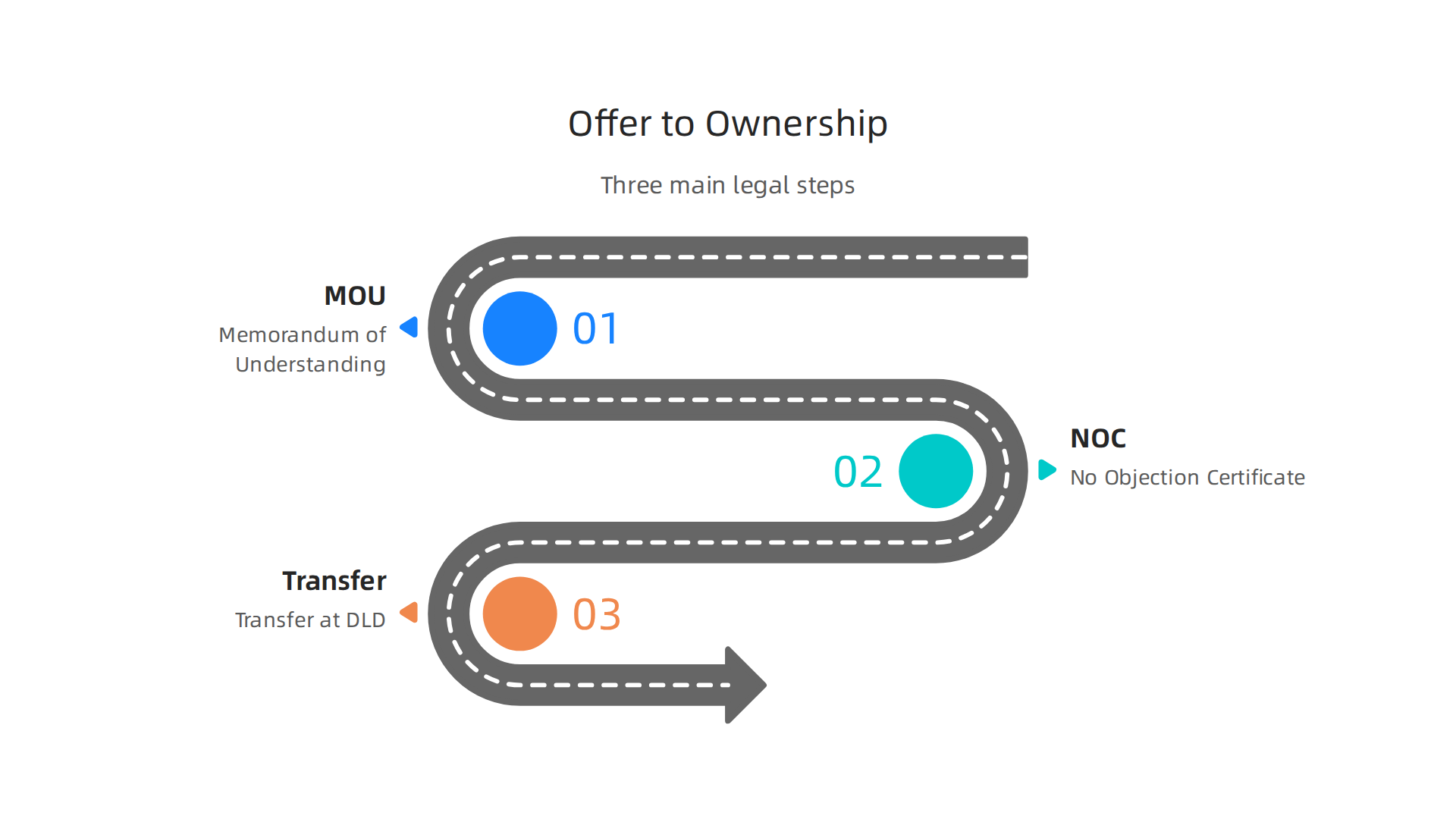
Step 1: The MOU Makes It Official
Once you find a property and agree on a price with the seller, the first legal document arrives. It is called the Memorandum of Understanding, or MOU. Do not treat this like a simple letter of intent. The MOU is a binding legal contract in Dubai.
This document spells out everything. It includes the final sale price, the payment plan, the handover date, and any furniture included. Both you and the seller must sign it.
You will usually pay a deposit at the MOU stage. This is often 10% of the property price. The money is held by the agent or a trustee. It only gets released once the terms are met.
Getting the MOU right is very important. This is where an experienced agent earns their keep. They help you negotiate the fine print so you do not get stuck with unfair terms. If you want to find a skilled negotiator, read our guide on how to hire a luxury real estate agent in Dubai in 2026.
The MOU is registered with the Dubai Land Department through the Trakheesi system. This makes the deal official.
Step 2: The NOC Clears the Path
Next comes the No Objection Certificate, or NOC. This is a letter from the property developer.
Why do you need it? The NOC confirms that the seller has paid all their service charges and maintenance fees. It proves there are no outstanding debts tied to the property.
If you skip this step, you could end up paying the seller’s old bills. That is a major headache. The developer checks their records carefully. They only issue the NOC if everything is clear.
Some developers charge a small fee for the NOC. This is usually between AED 500 and AED 5,000. It is a small price to pay for a clean transaction. This step protects you as the new owner. It gives you a fresh start.
Step 3: Transfer at the DLD
This is the final and most exciting step. You go to the Dubai Land Department (DLD) to transfer the property into your name.
Both you and the seller must be present. Or you can send someone with a special power of attorney. You need your passport, visa, and Emirates ID if you have one. You can find a detailed list of required documents in this guide on legal steps for foreign buyers.
At the DLD office, you pay the transfer fee. This is 4% of the property value. You also pay a small administrative fee, which is around AED 4,000 for properties worth over AED 500,000.
Once the payment is done and documents are checked, the DLD issues a new title deed in your name. You are now the legal owner of a property in Dubai.
Why This Matters
The whole process is clear and secure. RERA and the DLD designed it to protect both buyers and sellers. For foreign buyers, this system is a big reason why Dubai is a safe place to invest. The rules are applied equally to everyone.
Does this sound like a lot of work? It is. And that is exactly why a good agent is worth their fee.
After walking through these steps, you can see what’s the commission for a real estate agent really pays for. It pays for guidance. It pays for someone to chase the NOC. It pays for someone to stand with you at the DLD and make sure nothing goes wrong. To understand their full value, check out our guide on what a real estate agent does in Dubai in 2026.
Now that you know the process, you can move with confidence. When you are ready to look at top properties, read our insights on luxury property in Dubai 2026 and see what is worth investing in.
Costs Beyond Commission: Total Buyer Expenses Explained
Now you know what the agent’s commission covers. But when you ask what’s the commission for a real estate agent, remember that it is just one part of your total cost. There are several other fees you need to budget for. Let’s break them down so you do not get a nasty surprise.

The biggest cost is the Dubai Land Department (DLD) transfer fee. This is 4% of the property price. You also pay an admin fee of AED 4,000 plus 5% VAT for properties over AED 500,000. Full details are available in this guide on the cost of buying property in Dubai.
If you get a mortgage, the DLD charges a mortgage registration fee. This is 0.25% of the loan amount. There is also a small admin fee of around AED 290 plus VAT.
The bank will also ask for a property valuation. This usually costs between AED 2,500 and AED 3,500. It is a small price to pay for knowing the property is worth what you are paying.
You might also want a lawyer to double-check the contract. Legal fees in Dubai are very reasonable. Expect to pay between AED 10,000 and AED 20,000 for full representation.
Do not forget the NOC fee from the developer. This clears the seller’s dues and can cost between AED 500 and AED 5,000.
And then there is the agent’s commission itself. Usually 2% plus VAT.
So what does all this add up to? According to experts, your total buying costs typically land between 6% and 8% of the property price in 2026. Check the latest figures in this detailed breakdown of Dubai property taxes and fees.
Navigating these costs can feel overwhelming. But a great agent earns their keep by guiding you through every single one. To see exactly what an agent does to coordinate these payments and protect your money, read our full guide on what a real estate agent does in Dubai in 2026.
If you want a top agent who knows how to minimize these costs, check out how to hire a luxury real estate agent in Dubai in 2026.
When you are ready to look at top properties, read our insights on luxury property in Dubai 2026 and see what is worth investing in.
Tax Advantages of Buying Property in Dubai
When you ask what’s the commission for a real estate agent, keep in mind that this one-time cost is a small price to pay for entry into one of the world’s most tax-friendly property markets. The savings you get from Dubai’s tax system can make a huge difference over time.
Here are the main tax benefits that come with owning property in Dubai:
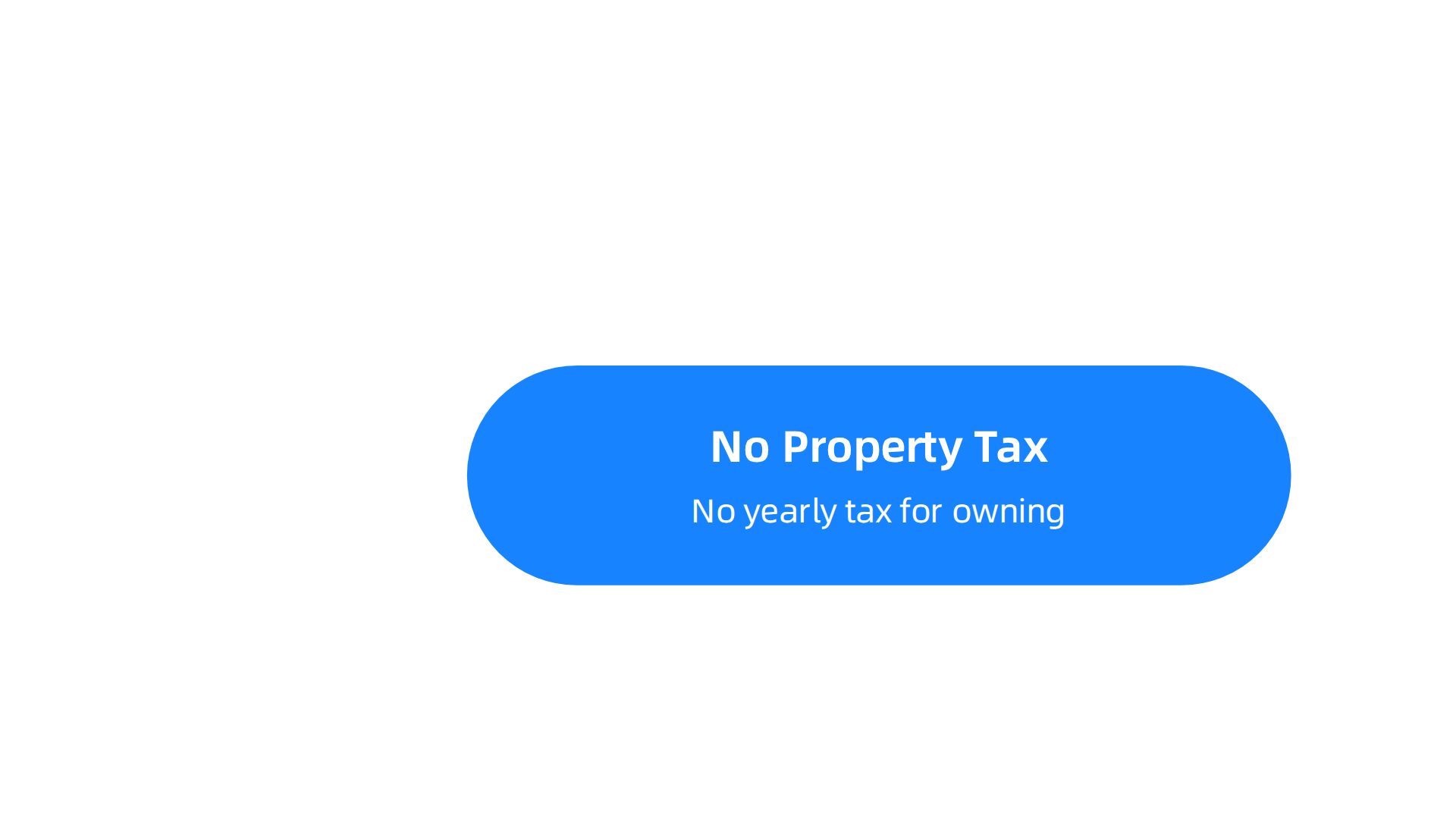
- No annual property tax. That is right. Once you buy, you do not pay any yearly tax just for owning the home. In many countries, this can be a big recurring cost.
- No capital gains tax. When you sell your property for a profit, you keep all of it. The government does not take a cut.
- No inheritance tax. You can pass your property to your family without the government taking a share.
- Only 5% VAT on new residential properties. If you buy a brand new home from a developer, you pay 5% VAT. That is it. For commercial properties, sometimes even that is exempt.
- Tax treaties with many countries. Dubai has agreements with lots of nations to avoid double taxation. That means you won’t pay tax in Dubai and then again in your home country on the same income. This is a key part of property law in Dubai that international buyers appreciate.
According to detailed market guides, this tax structure is one of the biggest reasons people choose Dubai over other global cities. You can check the full breakdown of Dubai property taxes and fees to see how it all works.
Think about it. The money you save on taxes each year can go straight into your pocket. It makes the commission for real estate agent you pay at the start feel like a smart investment.
To learn more about how these tax advantages make luxury properties a solid choice, read our guide on luxury property in Dubai 2026. If you want an agent who can explain every tax detail, check out how to hire a luxury real estate agent in Dubai in 2026 and get expert help.
Common Pitfalls Dubai Buyers Face and How to Avoid Them
Buying property in Dubai is exciting. But there are common traps that can cost you time and money. Here is what to watch out for and how to stay safe.
1. Overpaying commission because you did not shop around
Many buyers do not ask about fees before they start. If you are wondering what’s the commission for a real estate agent, the answer depends on who you work with. Some agents charge a flat fee. Others take a percentage of the sale price. The key is to ask upfront and compare offers. A good agent will explain their commission for real estate agent fee clearly in writing. If they dodge the question or rush you, that is a red flag.
To learn what a good agent should do for you, read our guide on what does a real estate agent do in Dubai in 2026.
2. Ignoring off-plan project risks and developer track records
Off-plan properties can be a great deal. But some developers delay projects or fail to deliver. That is why property law in Dubai includes strong protections. According to UAE escrow law requirements, developers must put all buyer payments into a dedicated escrow account. The Real Estate Regulatory Authority (RERA) also provides financial security and dispute resolution.

Always check the developer’s history before buying. Look at their past projects and completion rates.
For an extra layer of safety, review the sale and purchase agreement (SPA) carefully. Key clauses in off-plan SPAs can protect you from delays and non-delivery risks. If you want safer options, consider well-known developers. Our guide on luxury property in Dubai 2026 covers some trusted choices.
3. Failing to verify property title and encumbrances
Before you hand over any money, make sure the property title is clear. Are there any loans, mortgages, or legal disputes attached to the property? Dubai property laws require sellers to disclose these issues. But do not rely on their word alone. Always work with a lawyer or a licensed agent to run a title check through the Dubai Land Department. This simple step can save you from inheriting someone else’s debt or legal mess. It only takes a few minutes, but many buyers skip it.
If all of this sounds overwhelming, a skilled agent can guide you through every step. Learn how to hire a luxury real estate agent in Dubai in 2026 to get the right help.
These three pitfalls are easy to avoid. Ask the right questions, do your homework, and work with people you trust. That way, your Dubai property purchase stays smooth from start to finish and you get the most value for your money.
Investor Protections: Escrow Accounts, Trust Accounts, and RERA
So you know the common pitfalls now. But how does property law in Dubai actually keep your money safe? The answer is a three-layer system that protects buyers from the start.
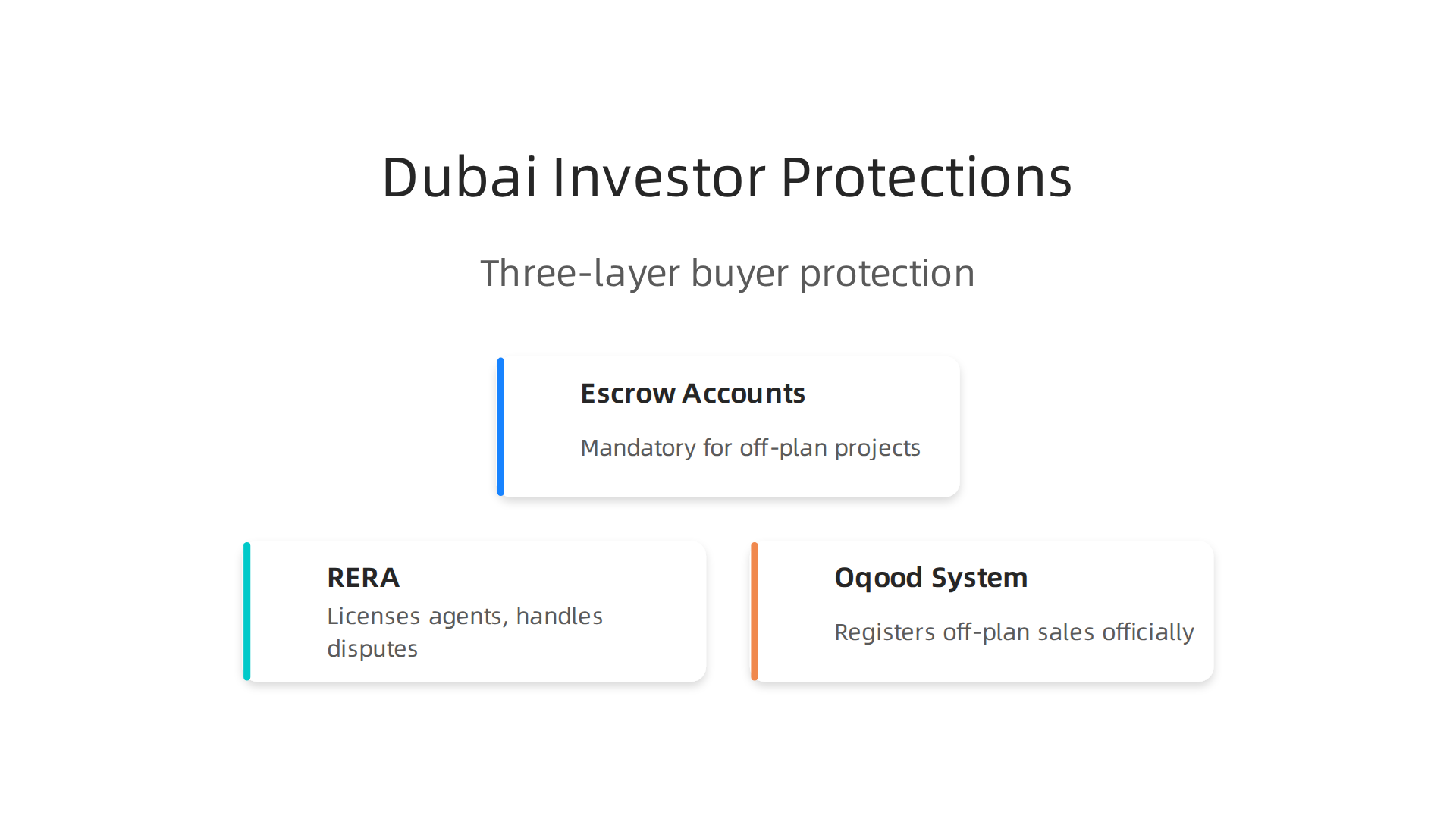
Escrow accounts are mandatory. When you buy an off-plan property, the developer cannot just take your payment and spend it. Under Article 6 of Law No. (8) of 2007, every off-plan project must have a dedicated escrow account run by a trustee. All buyer payments go into that account, and the developer only gets access as construction milestones are met. According to Mondaq’s breakdown of Dubai’s off-plan laws, this system prevents developers from using your money for other projects or running away with it. The UAE escrow law experts also remind you to always confirm the escrow account details before you pay.
RERA (Real Estate Regulatory Authority) is your watchdog. RERA licenses every developer and every real estate agent in Dubai. That means you can check if the person you are dealing with is legitimate. The dubizzle guide on RERA protections explains how RERA also handles disputes and ensures developers deliver on time. So when you ask "what’s the commission for a real estate agent?" a RERA registered agent must provide a clear answer in writing. That is the law. A licensed agent also helps you navigate the paperwork and the Sale and Purchase Agreement (SPA), which includes key clauses that shield you from delays.
The Oqood system adds another layer. Every off-plan sale is registered with the Dubai Land Department through Oqood. This makes the transaction official and public. It protects your ownership rights even before the property is built.
To fully understand how these protections help you, check out our guide on what does a real estate agent do in Dubai in 2026. A good agent will walk you through every requirement.
Bottom line: Dubai’s dubai property laws are built to protect you. Escrow accounts guard your money. RERA guards the process. Oqood guards your ownership. Use them all, and you can buy with real peace of mind.
Rental Yields and Capital Appreciation: Market Statistics 2026
Now you know the legal protections are in place. But the real question is: what kind of returns can you actually expect in 2026? The numbers look very promising for smart investors.
Rental yields in Dubai stay among the highest in the world. According to the Khaleej Times report on Dubai yields in 2026, average residential yields range between 6% and 8% across popular areas.
Some high-demand districts push even higher. That is a lot more than what you would get in London, New York, or Singapore. A detailed breakdown on rental yields in Dubai 2026 shows how you can calculate net returns after service charges and management fees.
Where are the best areas in 2026? Communities like Dubai Marina, JLT, and Jumeirah Village Circle consistently deliver gross yields of 6.5% to 7.5%. Luxury areas like Palm Jumeirah and Downtown Dubai give lower yields (around 4% to 5%) but offer stronger capital appreciation. The Luxhabitat guide to best yield communities confirms these patterns and helps you match your goals.
Capital appreciation is not uniform. Prime locations like Downtown and Palm Jumeirah have seen steady growth, driven by limited supply and high demand from wealthy buyers. The Dubai Real Estate Market Analysis for 2026 notes that demand remains positive but more selective, meaning quality properties hold value better. The legacy of Expo 2020 and ongoing population growth (Dubai added over 100,000 new residents in the past year) continue to push prices up in well-connected areas.
Market trends to watch. According to the Gulf News overview of the 2026 market, buyer selectivity is rising, infrastructure upgrades are linking new communities, and luxury demand stays strong. You can also check out this video breakdown of top rental areas for 2026 for a visual tour.
To find a property that matches your yield or appreciation goals, you need a knowledgeable partner. That is where a skilled agent makes all the difference. You might wonder, "what’s the commission for a real estate agent?" The standard fee is usually 2% of the purchase price, but some agents negotiate or offer flat fees. For a complete answer, read our guide on what does a real estate agent do in Dubai in 2026. And if you are looking at high-end properties, check out our advice on how to hire a luxury real estate agent in Dubai in 2026.
Bottom line: dubai property laws protect your investment, and property law in dubai ensures you get clear title. But the real reward comes from choosing the right area and the right agent. Rental yields and capital appreciation in 2026 offer strong opportunities for those who do their homework.
Summary
This article explains how real estate agent commissions work in Dubai in 2026 and places that cost inside the wider legal and financial picture. It shows the typical commission rates (around 2% for a buyer’s agent, 2% for the seller, plus VAT), how commissions are usually split and when they can be negotiated or charged differently for off‑plan and luxury deals. The guide walks you through the legal buying process—MOU, NOC and transfer at the Dubai Land Department—and explains buyer protections like escrow accounts, RERA registration and Oqood. You will also get a clear breakdown of additional costs (DLD transfer fees, mortgage registration, valuations and legal fees) and an estimate of total buying expenses (roughly 6–8% of price). The article covers tax advantages that boost long‑term returns and presents 2026 rental yield and appreciation trends to help investors choose areas. After reading, you’ll understand what you’re paying your agent for, how to negotiate fees responsibly, and how to avoid common pitfalls when buying property in Dubai.