Introduction: Renting vs Buying – A Crossroads for Dubai Property Seekers
Have you ever sat down to pay your annual rent cheque and felt a little voice inside ask, "Where is all this money going?"
In 2026, that feeling is more common than ever. Dubai’s rental market is alive with change. While some reports show residential rents have dropped by around 7% in areas this year, other data points to a bigger shift. A defining trend of 2026 is the move from renting toward homeownership, as more tenants start asking if paying a landlord each year is really the best plan for their future.
Here is the thing. Even with falling rental prices in some spots, the desire for long-term stability and a slice of Dubai’s tax free lifestyle is pushing people to look past the lease agreement. The question is no longer just about finding rental properties in Dubai. It is about knowing if owning makes more sense for you, your savings, and your family.

This guide gives you a clear, data backed look at the renting vs buying choice. We compare costs, market trends, and the real benefits of property ownership in Dubai so you can decide with confidence.
If you are ready to stop wondering and start doing, reach out for a free consultation with Ayaz Salman.
The Current State of Dubai’s Rental Market (2026)
So what is actually happening with rent in Dubai right now? The answer depends on where you look.
On one hand, some data shows overall residential rents have dipped. A recent report notes that rents fell by around 7% in the residential sector, dropping from AED 120,000 to AED 111,600 in certain areas. That sounds like good news if you are searching for properties for rent Dubai and hoping for a deal.
But here is the catch. That drop is not happening everywhere. In prime locations like Dubai Marina, Downtown, and Palm Jumeirah, demand is still sky high. Limited supply of new units in these hot spots means landlords can keep raising rents. Many tenants now face annual increases of 10% to 20% when renewing their lease.
Why is this happening? Several big drivers are at play. Dubai’s population keeps growing as more expats move in for jobs and lifestyle. New free zone regulations make it easier for businesses to set up, bringing in more workers who need rental properties Dubai. And there is a clear shift toward premium living, meaning people want better amenities, views, and locations even if it costs more.
This trend is pushing more tenants to look at long-term leases and even homeownership. As one market analysis explains, 2026 is seeing a clear move from mid-term rentals toward stability. When your rent jumps by 15% each year, the total cost of renting for five years starts to look a lot like a mortgage payment on a similar property.
If you are currently hunting for rental properties in Dubai, pay close attention to these numbers. A cheaper rent today might be followed by a big jump next year. And that can wreck your budget. On the flip side, locking in a fixed monthly payment through ownership gives you peace of mind.
Before you sign another lease, it is smart to compare your options. Check out our 2026 guide to properties to rent in Dubai to see current prices in different areas.
Or if you are starting to think about buying, our article on achieving tax free rental yields and capital appreciation in 2026 walks through the numbers.
The market is giving you a signal. The question is whether you will listen.
If you are ready to stop wondering and start making a smart move, reach out for a free Dubai real estate consultation with Ayaz Salman.
Financial Benefits: Why Buying Outperforms Renting Over Time
Here is the thing about renting in Dubai in 2026. You sign a lease today at what seems like a fair price. But next year, your landlord hits you with a 10% or 20% increase. Suddenly that “affordable” apartment costs you thousands more. And you have nothing to show for it.
Buying a property turns that whole story around.
Lock in Your Housing Costs
When you buy a home with a fixed-rate mortgage, your monthly payment stays the same for years. No surprises. No tense conversations with your landlord. You know exactly what you owe each month, and that number does not change just because the market is hot.
The UAE mortgage market is very competitive right now. According to Kredium, you can get a five-year fixed mortgage rate as low as 3.45% on a AED 1 million property with a 25% down payment.
That rate locks in your cost for half a decade.
Compare that to renting. A property that costs AED 100,000 per year to rent today could easily cost AED 120,000 or more next year. After five years of 10% annual increases, you would pay over AED 150,000 per year. Your mortgage payment would still be based on the original purchase price.
Build Equity Instead of Paying Landlord’s Bills
Here is the real difference. Every rent payment disappears. It pays your landlord’s mortgage, not yours.
Every mortgage payment you make builds ownership. Part goes to interest, yes. But the rest reduces what you owe and increases what you own. After five years, you might own 15% to 20% of the property outright. After ten years, even more. That equity is yours. You can borrow against it, sell it, or pass it to your family.
Think of it this way. Renting is like paying for a hotel room forever. Buying is like paying for a room that becomes yours.
Double the Return: Rental Income Plus Property Growth
Dubai real estate offers a rare combination. You get rental income from the property while the property itself grows in value.
Take Dubai Marina as an example. Current rental yields for studio apartments reach up to 6.50%, according to GuestReady. That means if you buy a AED 1 million studio, you could earn AED 65,000 per year in rent. After covering your mortgage and fees, you still have cash flow.
But that is not all. Property values in established areas have historically gone up over time. While short-term dips happen, the long-term trend is upward. You get two rewards: monthly income and capital appreciation.
If you want to see which communities offer the strongest returns, read our 2026 guide to achieving tax free rental yields and capital appreciation.
Renting vs. Buying: A Quick Comparison
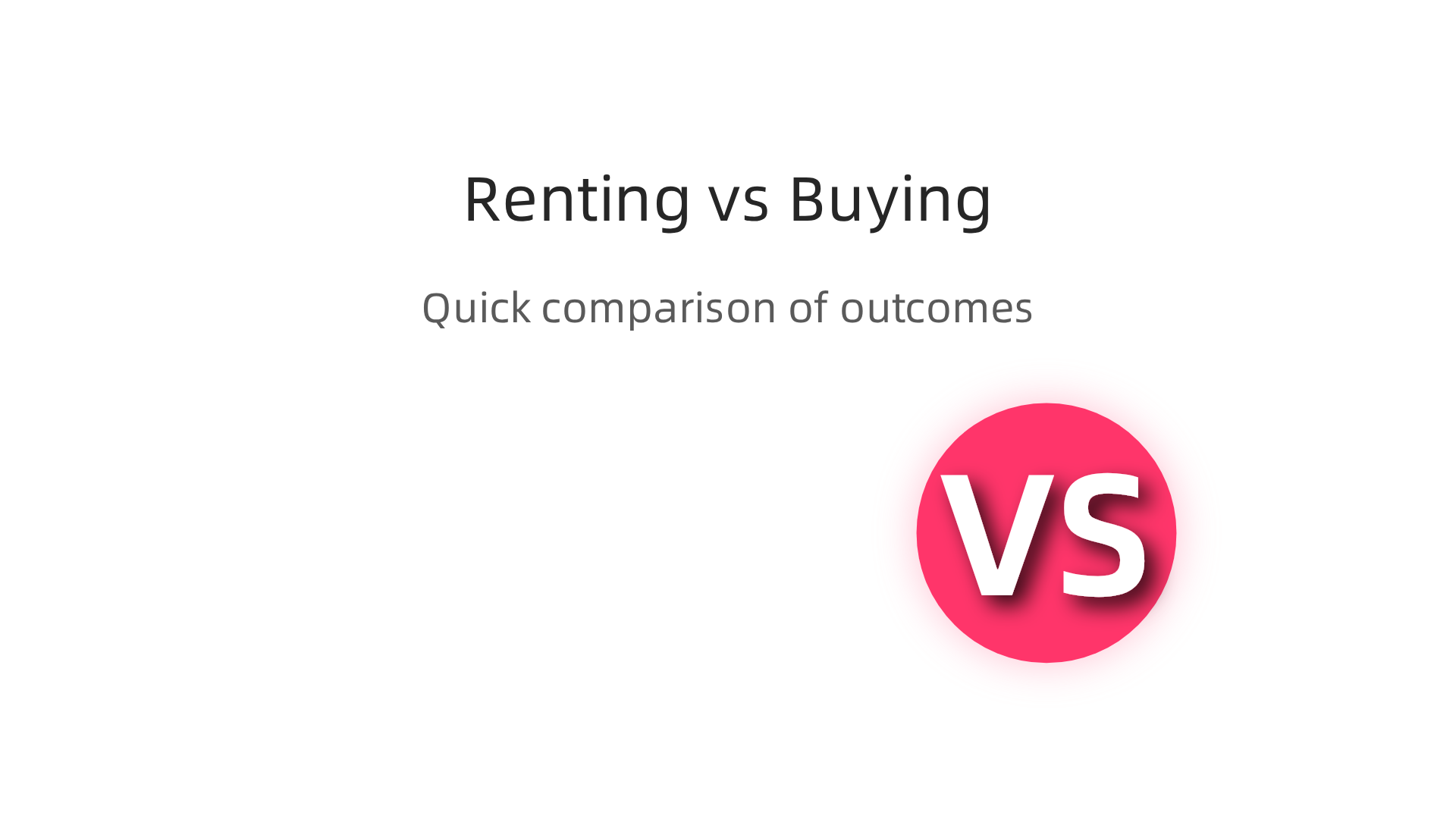
| Renting | Buying | |
|---|---|---|
| Monthly cost | Goes up every year | Stays fixed with a fixed-rate mortgage |
| What you own after 5 years | Nothing | A percentage of the property |
| Income potential | Zero | Rental yield of 5% to 8% |
| Long-term growth | None | Property value appreciates |
The Math Works in Your Favor
Let us run a simple example. You find a two-bedroom apartment in a good area. The purchase price is AED 1.2 million. With a 25% down payment (AED 300,000) and a 3.45% fixed mortgage, your monthly payment is around AED 4,500.
Renting the same unit costs AED 8,000 per month today. That is AED 3,500 more per month going to your landlord. Over five years, that difference adds up to AED 210,000 in extra money you throw away.
Meanwhile, your property might appreciate 5% per year. That is another AED 60,000 per year in value growth. After five years, your AED 300,000 down payment could be worth over AED 600,000 in equity.
Ready to Run Your Own Numbers?
Every situation is different. The best choice depends on your budget, timeline, and the area you choose. But the trend is clear. In 2026, buying a home in Dubai gives you financial stability and growth that renting simply cannot match.
If you want to see what buying could look like for you, schedule a free Dubai real estate consultation with Ayaz Salman. No pressure, just straight talk about your options.
Tax Advantages and Ownership Perks for International Investors
Maybe you are asking yourself: "If I buy property in Dubai, will I get hit with huge taxes every year?" It is a fair question, especially if you come from a country where property taxes, capital gains taxes, and rental income taxes eat into your profits.
Here is the short answer. In Dubai, you pay none of those.
Zero Property Tax, Zero Capital Gains, Zero Rental Income Tax
Dubai is one of the few places left in the world where the government does not tax your property or the money it earns for you. You pay no annual property tax. You pay no capital gains tax when you sell at a profit. And you pay zero tax on the rental income your property generates.
That last part is huge. If you buy a property and rent it out, every dirham of rent is yours to keep. No tax bill at the end of the year. No deductions. No paperwork.
This tax-free environment is a major reason why international investors choose Dubai over cities like London, New York, or Paris.

You can learn more about how this works in our 2026 guide to achieving tax free rental yields and capital appreciation.
Residency Benefits: More Than Just a Home
When you buy property in Dubai, you do not just get a place to live. You get the right to live in the UAE long term.
Property ownership of AED 750,000 or more qualifies you for a residence visa. This lets you live in Dubai, sponsor your spouse and children, and open bank accounts.
If you invest in higher value property, the rewards go up. Properties worth AED 2 million or more qualify for the 10 year Golden Visa. This gives you long term stability without the need to renew your visa every two years. You can live, work, and study in the UAE with full peace of mind.
That is a perk renting can never give you.
Freehold Ownership and Full Foreign Control
Another key advantage is ownership structure. In designated freehold areas, you can buy a property and own the land and building outright. You do not need a local partner. You do not need a UAE sponsor. You own 100% of the property, just like any local buyer.
Plus, there are no currency controls in Dubai. You can move money in and out freely. That makes it easy for international investors to manage their investments from anywhere in the world.
Why This Matters for Rental Properties in Dubai
When you look at properties for rent in Dubai, think about the bigger picture. Every time you look at rental properties in Dubai as a renter, you are paying someone else’s tax free income. You are giving your landlord money they do not need to share with the government.
When you buy, you become the person earning that tax free income. Over a few years, the savings add up dramatically.
If you are ready to see how these advantages could work for your specific situation, connect with Ayaz Salman for a free Dubai real estate consultation. No sales pitch, just clear answers about buying in 2026.
Navigating the Legal Terrain: Freehold Ownership and Visa Pathways
Now that you know the tax advantages, let’s talk about the actual process. You might be thinking: "Can I really buy property in Dubai as a foreigner? Is it complicated?"
The answer is yes, you can. And no, it is not as hard as you might think. In 2026, the rules are clear and straightforward for international buyers.
Freehold Areas: Where You Can Own 100%
Dubai has designated freehold zones where foreigners can buy property and own the land and building completely. You do not need a local partner. You do not need government approval before you start. You get full ownership rights, just like a UAE citizen.
According to a complete 2026 guide on foreign ownership, you can buy in areas like Dubai Marina, Palm Jumeirah, Downtown Dubai, and many others. These zones are specifically set up for international buyers.
The 7 Step Purchase Process
Here is how buying works in simple terms, based on the legal steps outlined for 2026:
- Choose your freehold zone and property type.
- Verify the developer is registered with the Real Estate Regulatory Authority (RERA).
- Sign a Memorandum of Understanding (MOU) or Sale and Purchase Agreement (SPA).
- Get a No Objection Certificate (NOC) from the developer. This confirms you can sell the property.
- Register the sale with the Dubai Land Department (DLD).
- Pay the transfer fees (usually 4% of the property price plus small admin costs).
- Receive your title deed. This is your proof of ownership.
No special government pre-approval is needed for foreign buyers, as confirmed by additional resources on UAE foreign ownership. You just follow the standard process.
Visa Pathways: From Property to Residency
Here is where it gets exciting. Your property purchase can open the door to living in Dubai.
2 Year Residency Visa: If you buy a property worth AED 750,000 or more, you qualify for a renewable residency visa. This lets you live in Dubai, sponsor your family, and open local bank accounts.
10 Year Golden Visa: If your property is worth AED 2 million or more, you can get the Golden Visa. No need to renew every two years. Full stability for a decade.
This is something renting can never give you. When you look at properties for rent Dubai on listing sites, remember that those rental properties in Dubai are owned by investors who went through this exact process. They turned a purchase into a path to residency.
Why This Matters for Your Decision
When you compare buying versus looking at rental properties in Dubai, the legal landscape strongly favors owners. You get full ownership, clear title, and a pathway to live in one of the world’s safest cities.
If you want to see exactly how the process works for your specific budget and goals, consider a 2026 guide to achieving tax free rental yields to understand the full picture.
Ready to Take the Next Step?
The legal process is clear. The visa benefits are real. The only question left is which property fits your goals. If you want a no pressure conversation about how buying could work for you in 2026, connect with Ayaz Salman for a free Dubai real estate consultation. No sales pitch, just clear answers.
Top Dubai Neighbourhoods for High Rental Yields and Capital Growth
So which area in Dubai gives you the best return? That is the million dollar question. Actually, it might be the AED 750,000 question, especially if you want that residency visa.
The good news is that plenty of neighbourhoods in 2026 offer strong rental yields and long term growth. You just need to match the right area to your goals.
Established Neighbourhoods with Proven Yields
Some areas have a long track record of delivering solid returns. These are the safe bets.
Dubai Marina is a top performer. According to a 2026 guide on best rental yields, studio apartments here can deliver gross yields up to 6.50%. The area is always in high demand from professionals and tourists. That means low vacancy and steady income.
Jumeirah Lakes Towers (JLT) is right next door and offers similar numbers. You get a mix of lake views, offices, and apartments. Yields here typically sit around 6% to 7%, as confirmed by community yield reports for 2026. Plus, JLT has more affordable entry points than Marina.
Downtown Dubai is the iconic choice. You pay a higher purchase price, but the rental demand is massive. People want to live near the Burj Khalifa and Dubai Mall. Expect gross yields of 5% to 6.5% depending on the building and unit size.
Business Bay is the smart alternative to Downtown. You get similar rental demand at a lower buy-in cost. Many investors target this area for yields of 6% to 8%. It is a favorite for professionals working in the financial district.
Emerging Areas with High Appreciation Potential
If you want growth on top of income, look at newer communities.
Dubai Creek Harbour is a standout. This master planned district is still in its early stages, but prices are already rising. The developer is building it as the next Downtown. Early buyers often see the strongest capital gains. The 2026 guide on best places to invest lists it as a top pick for appreciation.
City Walk offers a luxury lifestyle with high rentability. It is close to the city center and has great walkability. Units here rent fast due to limited supply.
Jumeirah Village Circle (JVC) is the budget friendly growth play. You can buy a one bedroom apartment for a much lower price than Marina or Downtown. Rental yields often hit 7% to 9% because the purchase price is low while rents remain strong. Many investors start their portfolio here.
What Makes a Neighbourhood Rentable?
You can have the best yield numbers on paper, but if nobody wants to live there, you will struggle.
Here are the factors that keep your property rented:
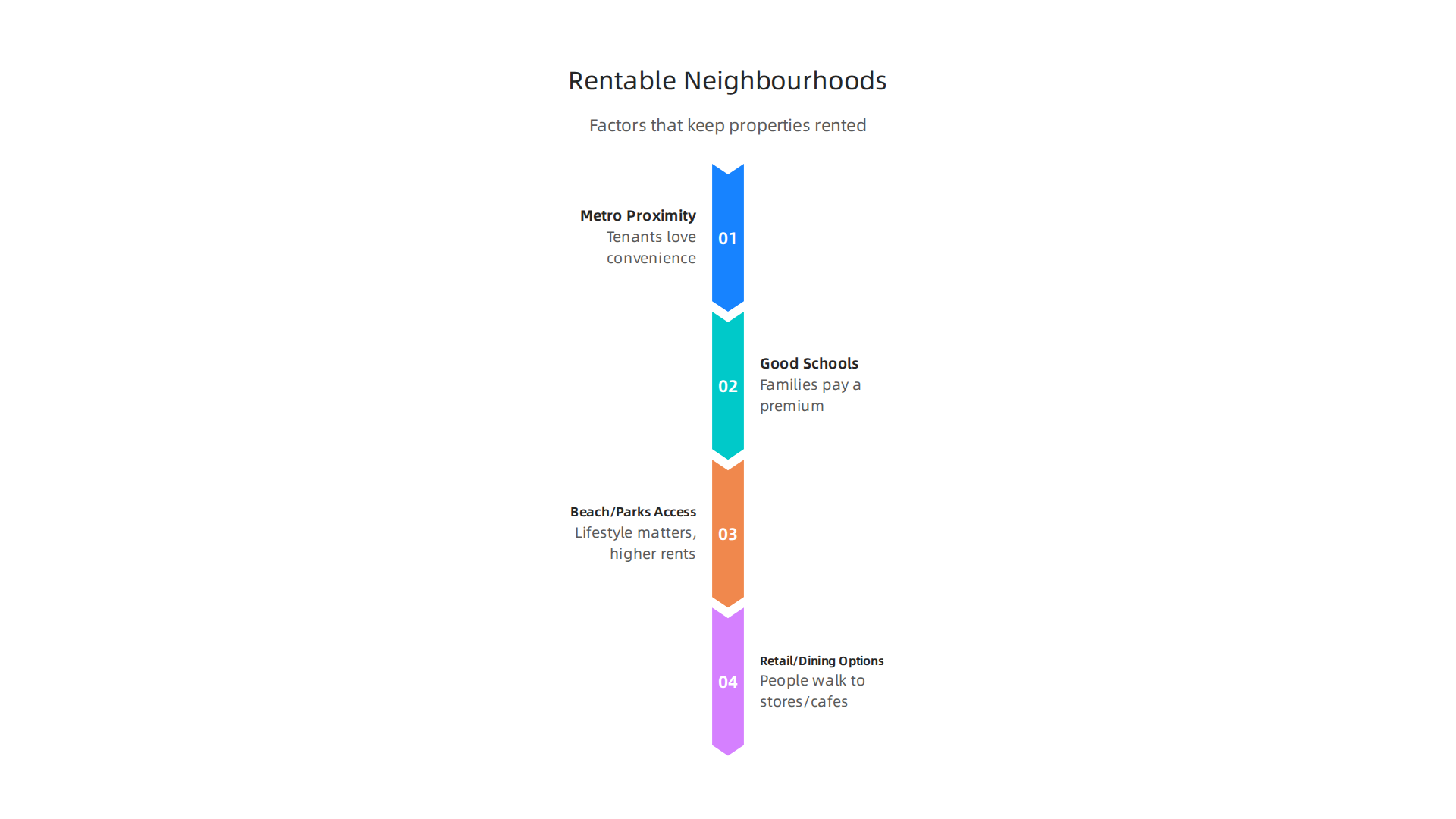
- Proximity to a metro station. Tenants love convenience. A five minute walk to the metro adds AED 10,000 to annual rent easily.
- Good schools nearby. Families pay a premium to live close to reputable international schools.
- Beach access or community parks. Lifestyle matters. Areas with beaches or green spaces always command higher rents.
- Retail and dining options. If people can walk to a grocery store or a café, they stay longer.
That is why you see tenants consistently searching for the best properties for rent Dubai has to offer. They want a neighborhood that works for their daily life.
How This Helps Your Decision
When you compare buying versus looking at rental properties in Dubai on listing sites, you now know exactly what to look for. Established areas give you steady, predictable returns. Emerging areas give you higher upside.
If you want a deep dive into how to maximize those returns, the 2026 guide to achieving tax free rental yields walks you through the math step by step.
Turn This Knowledge into Action
You now have the list of top neighbourhoods. The next step is finding the right unit at the right price. That is where a local expert can save you time and money.
For a free, no pressure conversation about which area fits your budget and goals, connect with Ayaz Salman. He can help you find rental properties in Dubai that match your investment strategy. Just send a message and get clear answers.
How to Choose a Trusted Developer and Secure Your Property
You have picked your neighborhood. You have checked the yields. Now it is time to secure the deal.
But here is the thing. Not all developers are the same. And not all agents have your back.
Choosing the wrong partner can cost you thousands of dirhams. It can also delay your residency visa or your rental income. So let’s make sure you choose wisely.
Step 1: Verify Your Developer
This step comes first for a reason.
In Dubai, the Real Estate Regulatory Authority keeps a list of all approved developers. You must check this before you sign anything.
A 2026 legal guide for foreign buyers on Pearlshire confirms that verifying the developer’s RERA registration is one of the top legal steps you should take. Do not skip this.
Why does it matter? RERA registration means the project is approved. It means your money goes into an escrow account. That account protects your investment.
Next, look at their track record. Did they hand over previous projects on time? Visit their finished communities. Talk to people who live there.
A strong developer offers fair payment plans. They do not need to trap you with aggressive terms.
Foreigners have full ownership rights in freehold areas. As Sands of Wealth explains in their 2026 foreign ownership guide, you do not need special government approval to buy. But you do need a developer you can trust.
Step 2: Use a RERA Registered Agent
You might think buying directly from a developer saves money. But a good agent actually saves you money.
A RERA registered agent knows the market. They know which developers delay projects. They know which buildings have high service charges.
In 2026, the market has plenty of options. A good agent helps you find the best deals. They also negotiate on your behalf.
The trick is finding the right agent. Our guide on how to choose a real estate company in Dubai that puts your interests first gives you the exact questions to ask before hiring anyone.
Avoiding one bad deal can save you years of headaches.
Step 3: Negotiate the Terms
Many investors accept the first payment plan they see. That is a mistake.
Ask for a post-handover payment plan. This is common in 2026 for off-plan properties. Instead of paying 50% during construction, ask for 20%.
You can also negotiate service charges. Sometimes developers offer one year free or a discount for early payment.
What about maintenance after handover? Who fixes the AC? Who handles plumbing repairs?
Getting these details in writing protects your future rental income. If you plan to look at properties for rent Dubai, you need a property where the ongoing costs stay low. Check our 2026 guide to properties to rent in Dubai to see how costs affect your cash flow.
Dubai’s market is wide open to foreign buyers. The Ultimate Guide to Buying Property in Dubai UAE (2025-2026 Edition) by exchangerates.org.uk confirms that anyone can purchase freehold property without needing citizenship. So the opportunity is real.
Turn This Knowledge into Action
You now know what to look for in a developer and an agent. You know what to negotiate.
The next step is finding a property and getting the best terms. A local expert can handle the entire process for you.
For a free, no pressure conversation about your investment goals, connect with Ayaz Salman. He helps buyers find secured, high-yield properties and negotiates fair terms.
Get your FREE Dubai Real Estate Consultation with Ayaz Salman here.
Summary
This article helps Dubai tenants decide whether to keep renting or switch to owning in 2026 by comparing market trends, costs, and long‑term benefits. It explains current rental dynamics—where rents are falling and where they keep rising—and shows how fixed mortgage payments, equity building, rental income and capital appreciation can outweigh repeated rent increases. The guide covers tax advantages, residency visas tied to property value, and the legal steps for foreigners buying freehold property. You’ll learn how to compare monthly costs, run a simple buy‑vs‑rent example, pick high‑yield neighbourhoods, and vet developers and agents so your purchase is secure. After reading, you’ll be able to run the numbers for your situation, spot the best areas for returns, and follow a clear checklist to buy with confidence.