Are you looking to buy a home or invest in Dubai’s red-hot property market? It’s an exciting time, but there is one cost that often surprises people: real estate agent commissions. You might see a beautiful apartment in Dubai Marina or a villa on Palm Jumeirah, and then realize there are extra fees on top of the sale price. Understanding these fees is the first step to making a smart deal.

So, how much do you actually pay? In Dubai, the standard is pretty consistent. For a home purchase, you typically pay 2% of the sale price to your agent. If you are renting, the commission is usually 5% of the annual rent. These are the norms set by the Real Estate Regulatory Agency (RERA). For example, on a AED 3 million property, that 2% equals AED 60,000. That is real money. You can see how this works by checking out a detailed breakdown of how real estate commission structures work in Dubai and the UAE.
Why does this matter so much? Because knowing what is standard helps you spot a good deal. Not all commissions are set in stone. Some rates are negotiable, especially on higher-value properties. And for off-plan purchases from developers, you might pay zero commission at all. The key is to go in with your eyes open.
This guide will walk you through everything you need to know about real estate agent commissions in Dubai. We will compare fees to other countries, show you what is negotiable, and give you practical tips to keep more money in your pocket. Whether you are a first-time buyer or a seasoned investor, knowing these details can save you thousands.
If you are serious about making a move, get personalized advice from someone who knows the market inside and out. Book your FREE Dubai Real Estate Consultation today and start your journey with confidence. And for a broader look at the whole process, read this complete guide to buying property in Dubai for investors.
What Are Real Estate Agent Commissions in Dubai?
So what exactly is a real estate agent commission? Think of it as a service fee you pay a professional for helping you buy, sell, or rent a property. In Dubai, this fee covers everything from finding the right listing and negotiating the price to handling all the paperwork. Without an agent, you would have to do all that work yourself.
But here’s where it gets a little tricky. Who actually pays the commission? The answer depends on the type of deal.
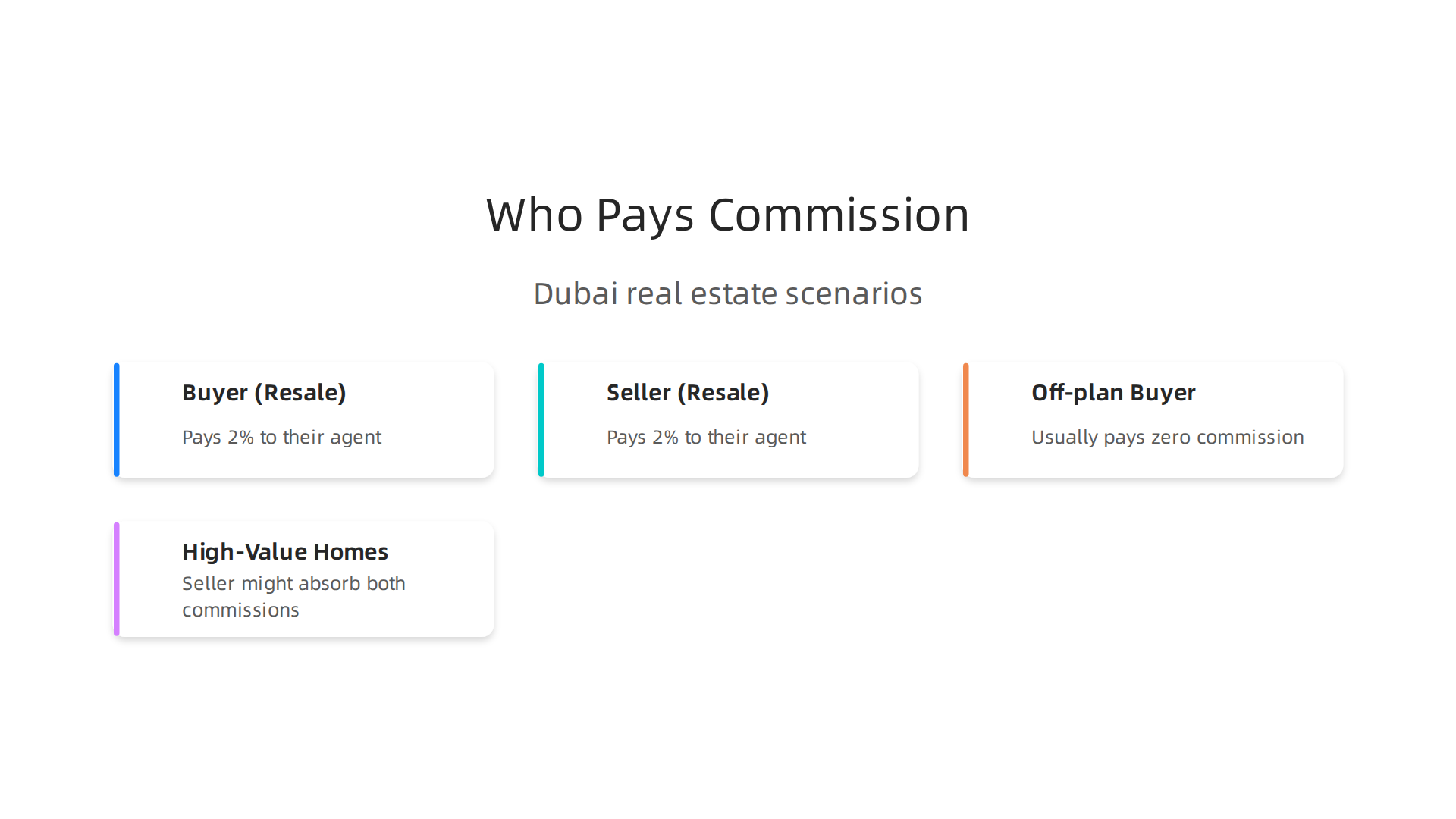
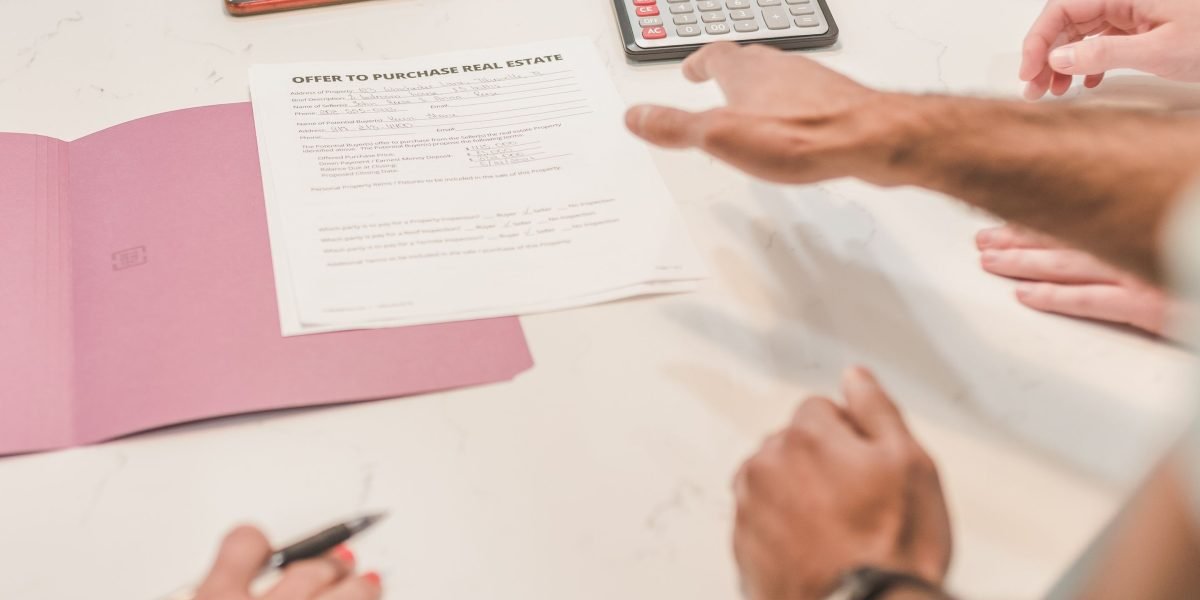
In many resale transactions, the buyer pays 2% of the purchase price to their agent. At the same time, the seller also pays 2% to their own agent. This is called a co-brokerage arrangement. It is the most common model in Dubai right now. You can see a full breakdown of how this works in this detailed article on real estate agent commission in Dubai.
However, not every deal follows this rule. For off-plan properties bought directly from a developer, the buyer usually pays zero commission. The developer pays the agent instead. In some cases, especially for high-value luxury homes, the seller might absorb both commissions to make the deal more attractive. So the standard is 2% from the buyer, but practices do vary.
Now, what about the actual range? Most sources agree that the realistic range for agent fees in Dubai falls between 0% and 2.5% for resale properties. The standard 2% is the norm for areas like Dubai Marina, Downtown Dubai, and Palm Jumeirah. For rentals, you typically pay 5% of the annual rent. On a lower-value rental, some agencies charge a flat fee of AED 5,000 instead. For a broader view of all costs involved, check out this guide on property taxes and fees in Dubai for 2026.
Understanding these basics helps you budget better. If you know the commission model before you start looking, you can compare offers more fairly. And if you are working with a real estate agency in Dubai, make sure to ask upfront who pays what. A good agent will explain the fee structure clearly.
One more thing to keep in mind: commissions are not locked in stone. On very expensive properties above AED 10 million, you can sometimes negotiate the rate down to 1.5% or 1.75%. And if you are selling a property in Dubai, you can also negotiate the listing fee with your agent. The key is to ask the right questions early.
If you want to learn more about how to pick a trustworthy professional, read this guide on how to find a trustworthy property broker in Dubai and avoid scams. It will help you feel more confident before you sign any agreement.
How Are Real Estate Agent Commissions Structured in Dubai?
Now that you know the standard rates, let’s talk about the different ways those fees are set up.

Not all commissions look the same. Some agents charge a percentage of the sale price. Others use a fixed fee, especially on high-value homes. And there are special cases like dual agency. Understanding these structures helps you know what to expect and what questions to ask.
Percentage vs. Fixed Fee
The most common model is a percentage of the property price. For a resale home worth AED 3 million, that means AED 60,000 in commission at the 2% rate. But on very expensive properties above AED 10 million, some real estate agencies in Dubai offer a flat fee instead of a percentage. Why? Because a percentage on a AED 20 million villa would be AED 400,000, which can feel too high. A fixed fee, say AED 150,000 or AED 200,000, gives both sides clarity and can save the buyer a lot. Always ask your agent if they offer a flat fee option for luxury deals.
Dual Agency: One Agent, Two Roles
Sometimes one agent represents both the buyer and the seller in the same deal. This is called dual agency. In Dubai, it is allowed, but the law requires full disclosure. The agent must tell both parties in writing that they are working for both sides. Because of this, the commission can be different. Instead of two separate 2% fees, the agent may charge a single commission, often 2% to 3% from the buyer, with no separate seller fee. The risk here is less negotiation power for both sides. If you are buying or selling, ask upfront if the agent is acting as a dual agent. If they are, you might want to get your own representation. For more on how to pick the right professional, read this guide on how to choose a real estate company in Dubai that puts your interests first.
Commission Splits Between Agents
In a typical co-brokerage deal, the listing agent and the buyer’s agent split the total commission. The split is not set by law. It depends on the agreement between the two brokerages. For example, if the buyer pays 2% to their agent and the seller pays 2% to their agent, each agent’s brokerage keeps that 2%. But sometimes one side’s agent gets a larger share if they brought the deal or have a special arrangement. On the agent side, how much an individual agent keeps from that 2% also varies. Most agents work on a commission-only basis and split the fee with their brokerage. The agent might keep 40% to 70% of the commission they earn. For a deeper look at how these splits work across the UAE, check out this breakdown of how real estate commission structures work in Dubai and the UAE.
Key Takeaway for You
The structure of the commission can change how much you pay and who gets the money. Whether it is a fixed fee for a luxury home, a dual agency setup, or a standard split between agents, always get everything in writing. Ask your agent to explain exactly how they are paid and whether they represent only you or both sides.
If you are planning to buy, sell, or rent in Dubai and want clear, honest advice, reach out for a FREE Dubai Real Estate Consultation. A professional can walk you through all the options and make sure you get a fair deal.
Legal Framework and Regulations Governing Commissions in Dubai
Now that you know how commissions are structured, it is just as important to understand the rules that protect you. Dubai has a strong legal framework for real estate. Two main bodies oversee everything: the Dubai Land Department (DLD) and the Real Estate Regulatory Authority (RERA).
They set the guidelines that every real estate agency in Dubai must follow.
RERA Does Not Cap Rates, But Sets the Rules
A common question people ask is whether RERA limits how much an agent can charge. The answer is no. RERA does not set a maximum or minimum commission rate. Instead, it focuses on making sure the process is fair and transparent. The law requires all real estate brokers in Dubai to have a valid license. They must also pass a certified exam from the Real Estate Institute of Dubai. This means when you work with a licensed agent, you know they have proper training. For a full overview of what RERA and DLD do, check out this guide on Laws and regulations in Dubai real estate 2024.
The Commission Agreement: Form A and Form B
Here is the most important rule for you. Every time you hire an agent to help you buy or sell property in Dubai, the agent must give you a written agreement. This is called a Form A if you are the seller, or a Form B if you are the buyer. The form must include the exact commission amount, the property details, and the names of both parties. Both you and the agent must sign it. The agent then registers this form with the DLD. Without a signed form, the agent has no legal right to claim their fee. This is a huge protection for you. It means you will never be surprised by a hidden charge. For a deeper dive into how these agreements work, read this legal overview on What Every Property Purchaser must know about Real Estate Agents in Dubai.
The Three-Broker Rule and Other Key Rules
In 2022, the DLD introduced the Three Broker Rule. This rule says a seller can list their property with a maximum of three agents at the same time. This stops the problem of too many agents calling about the same home. It also helps buyers know who the real listing agent is. Agents must also follow strict rules about handling money. If an agent collects a deposit from you, they must put it into an escrow account. Not doing so can lead to fines of up to half a million dirhams. For a complete list of 2026 regulations, look at this guide on Dubai Real Estate Laws and Regulations 2026.
What This Means for You
The legal system in Dubai is designed to protect you. As long as you work with a licensed agent and sign a proper commission agreement, you are in a strong position. Always ask to see your agent’s RERA card before signing anything. You can also verify their license online through the DLD website. If you want to learn more about choosing the right professional, read this guide on how to find a trustworthy property broker in Dubai.
With clear rules and strong enforcement, you can buy or sell property in Dubai with confidence, knowing that the law is on your side.
Dubai Real Estate Commissions vs. Global Markets: How Do They Compare?
You might be wondering how Dubai’s commission rates stack up against other places around the world. The answer might surprise you. In 2026, Dubai remains one of the most buyer-friendly markets when it comes to real estate agent commissions, especially compared to the United States and Australia.
A Quick Look at Commission Rates Worldwide
Here is a simple comparison of typical real estate agent commissions across major markets.
Keep in mind these are averages. Actual rates vary by property, agent, and negotiation.
| Market | Typical Commission Rate | Who Usually Pays |
|---|---|---|
| United States | 5% to 6% | Seller (split between buyer and seller agents) |
| United Kingdom | 1% to 3% | Seller |
| Australia | 2% to 3% | Seller |
| Singapore | 1% to 2% | Split between buyer and seller |
| Hong Kong | 1% to 2% | Split between buyer and seller |
| Dubai (Buyer Side) | ~2% | Buyer (most common) |
| Dubai (Seller Side) | 2% to 5% | Seller (negotiable) |
The numbers above come from a detailed global estate agent commission comparison that looked at 28 countries. As you can see, the US and Australia sit at the higher end, while Dubai’s typical 2% buyer commission looks quite reasonable.
Why Dubai Stands Out
For buyers, paying only around 2% in Dubai is a big win. In many Western markets, buyers do not pay a direct commission at all, but that cost is baked into the final purchase price through the seller’s agent fees. In Dubai, the system is more transparent. You know exactly what you are paying your agent.
But here is the catch. Some real estate agencies in Dubai add extra charges on top of the standard commission. You may see things like agency fees, admin fees, or processing charges. These can push your total cost higher than the headline 2%. Always ask your agent for a full breakdown before signing any agreement.
How to Make the Smartest Choice
Because every market works differently, it pays to understand the full picture before you sell property in Dubai or buy. The commission you pay is only one piece of the puzzle. Also consider the quality of service, market knowledge, and whether your agent is licensed and registered with RERA. A trusted real estate broker in Dubai can save you a lot more than they cost.
If you want to learn more about how agents operate in Dubai, check out this guide on what a real estate agent does in Dubai.
Ready to Take the Next Step?
Comparing commissions across markets is helpful, but the best way to know your true cost is to talk to a local expert.

If you are thinking about buying, selling, renting, or investing in Dubai, you can connect with Ayaz Salman for a FREE Dubai Real Estate Consultation. He can walk you through the exact fees and costs, so you know exactly what to expect. No surprises. Just clear, helpful advice.
Negotiating Real Estate Agent Commissions: Tips and Strategies for 2026
You might think the 2% commission Dubai real estate agencies charge is a fixed number. But here is the truth. In 2026, many agents are open to negotiating their fees, especially in certain situations. Knowing how and when to ask can save you thousands of dirhams.
When Negotiation Works Best
Not every situation is right for bargaining, but some make it easier. Pay attention to these moments.
- In a slower market: When demand drops, agents may be more willing to lower their rate to secure a deal.
- With off-plan properties: Developers often work with agents on bulk commissions. Your agent might have room to reduce their share.
- When you bring value: If you are a repeat client or can refer others, agents will likely give you a better rate.
According to a detailed guide on how to negotiate commission with your real estate agent, the best time to bring up fees is early in the conversation. Start with a respectful question like, "Is there flexibility on your commission rate?" This keeps things friendly and opens the door.
Practical Tips to Lower Your Costs
Here are a few strategies that work in Dubai and beyond.
- Get multiple quotes. Talk to a few real estate brokers in Dubai before choosing one. Compare their rates and services. This gives you leverage.
- Ask for a discount on the buyer’s side. If you are buying, the buyer’s agent usually receives 2%. You can politely ask if they can reduce it to 1.5% or offer a flat fee instead.
- Propose a flat fee. Instead of a percentage, offer a fixed amount for the work. This can be cheaper on high-value properties. Some agents will agree if the work is straightforward.
A smart approach is to mention that you have done your research. As noted in an article on how much real estate agent commission costs in Dubai, the standard rate can sometimes be negotiated based on the specifics of the deal.
What to Avoid During Negotiation
Some mistakes can hurt your chances or lead to bad deals.
- Never pay upfront fees. A legitimate agent earns commission at closing, not before. Any request for money upfront is a red flag.
- Avoid vague agreements. Make sure everything is in writing. The commission amount, what services are included, and when it is due.
- Do not sign an exclusive buyer representation without negotiating first. Some agents will ask you to commit before discussing fees. Instead, have the commission talk first. Once you sign, you lose bargaining power.
For more context on fees and what is typical, check out this breakdown of real estate agent commission in Dubai in 2026. It explains what buyers really pay and how to spot fair offers.
Remember, negotiation is a conversation, not a fight. Stay respectful, know your numbers, and you will walk away with a deal that works for both sides.
Common Misconceptions and Pitfalls About Real Estate Agent Commissions in Dubai
You might have heard that real estate agent commissions in Dubai are set by the government. That is not true. In fact, there is no law that fixes the rate at 2%. Each brokerage and agent can set their own fees. This means you have room to negotiate.
A common misunderstanding is that the 2% you see everywhere is a legal requirement. But the Real Estate Regulatory Authority (RERA) does not set commission rates. The rate is simply a market norm that most agencies follow. You can read more about these Dubai real estate laws and regulations to see that commissions are not government-controlled.
Pitfall: No Written Agreement
One big mistake buyers and sellers make is not getting a written commission agreement.

Maybe you agree verbally that the fee is 2%. But later, the agent might claim a higher amount or add extra charges. Without a signed contract, it becomes your word against theirs.
In Dubai, a brokerage agreement should clearly state the commission amount, when it is due, and what services are included. RERA requires these agreements to be in writing. If an agent refuses to put it in writing, walk away. That is a major red flag.
Another helpful guide on how to find a trustworthy property broker in Dubai and avoid scams walks you through the exact steps to vet an agent and protect yourself.
Pitfall: Confusing Agent Commission with Other Fees
Some buyers think the 2% agent commission is all they pay. But there are other costs too. For off-plan properties, developers sometimes charge a separate processing fee or administration fee on top of the agent commission. And the Dubai Land Department (DLD) charges a transfer fee of 4% of the property value. That is not part of the agent’s commission.
Make sure your agent explains every cost clearly. Ask for a full breakdown of fees before signing anything. A good agent will show you exactly where every dirham goes.
For more details on what fees apply, check this article on Dubai real estate laws, rules for 2026, and regulations for investors. It explains the off-plan fee structure and the DLD transfer fee.
Stay Smart, Stay Protected
The best way to avoid these pitfalls is simple: get everything in writing, ask questions, and never assume the rate is fixed. If something feels off, trust your gut and look for another agent.
Need help understanding your options? You can get a FREE Dubai Real Estate Consultation to talk through your situation with an expert who knows the local market inside and out.
Summary
This article explains how real estate agent commissions work in Dubai, why they matter, and how to protect your money when buying, selling or renting. It covers the common rates—about 2% for buyers on resale deals and 5% for annual rent—how fees are split in co-brokerage, and special cases like off-plan deals or flat fees for luxury properties. You’ll learn the different commission structures (percentage vs fixed), what the law requires (licensed agents, Form A/Form B, Three-Broker Rule), and practical negotiation tactics to lower costs. The guide also highlights common pitfalls—no written agreement, hidden admin fees—and shows how Dubai compares with other markets. By the end you’ll know what to ask an agent, how to verify credentials, and how to budget for commissions and related charges.