

Introduction
Dubai’s real estate market is booming in 2026. With its tax-free environment and some of the highest rental yields anywhere in the world, the city continues to pull in investors from every corner of the globe. In 2025 alone, the market recorded over 267,000 property transactions, and early 2026 data shows activity staying just as strong. You can look at the 2026 Dubai property transaction volume analysis for the full numbers.
But here is the truth. For most buyers, the process feels anything but simple. You face a flood of listings, confusing legal steps, and the constant worry about picking the right developer. It is easy to feel stuck before you even start.
That is why we built this guide. It gives you a clear, step-by-step framework to handle your property search in Dubai without the headache. Whether you are exploring properties for sale in Dubai UAE or looking at off-plan projects, this framework helps you cut through the noise and make confident decisions.
Want the full picture on how the buying process works from start to finish? Check out our complete guide to buying property in Dubai for investors.
And if you are serious about finding the right property and want expert help, here is a direct next step. Connect with Ayaz Salman for your FREE Dubai Real Estate Consultation. It costs nothing, and it gets you straight to someone who knows the market inside out.
Define Your Property Search Goals and Budget
Before you open a single listing, you need to get clear on one thing. Why are you looking at properties for sale in Dubai in the first place?
Your answer shapes everything that comes next. If your goal is a primary residence, you care about schools, commute times, and community vibe. If your goal is rental income, you care about yield percentages and tenant demand. If your goal is long term capital appreciation, you care about growth corridors and developer reputation.
The Q1 2026 numbers from the Dubai residential property market analysis show just how active the market is. Residential transactions hit 45,221 in the first three months of 2026 alone, worth AED 137.31 billion. That pace tells you competition is real. You need focus.
So decide your purpose first. Then let your budget do the heavy lifting.

What Your Budget Actually Needs to Cover
Here is where most first time buyers get tripped up. They save for the purchase price and forget everything else.
A realistic budget for your dubai property search must include:
| Cost Item | Typical Amount |
|---|---|
| Property purchase price | Whatever you negotiate |
| Dubai Land Department fee | 4% of purchase price |
| Agent commission | Usually 2% of purchase price |
| Service charges | Annual, varies by community |
| Mortgage arrangement fees | If financing |
| Valuation fee | If using a mortgage |
| Property registration fee | Around AED 4,000 |
Ignore these and you risk running short at the closing table. Not a fun surprise.
Use Your Goals as a Filter
Here is a time saving trick. Once you know your goal and your real budget, you can use a simple property search dubai filter based on both.
For example, if you are buying for rental income, focus on mid market apartment hubs where yields run 8% to 9.5%. Areas like Jumeirah Village Circle and Business Bay saw the highest transaction volumes in 2025. That liquidity matters when you eventually want to sell.
If you are buying for your family to live in, prioritize villa communities with growing supply. Villa transactions have been climbing from 7.9% of the market in 2024 to 13.5% in early 2026, as the Dubai housing market continues to shift toward bigger homes.
This approach saves you from scrolling through thousands of irrelevant listings. Instead of searching broadly for dubai properties buy, you search specifically by your criteria.
Want to see how different communities compare for your exact situation? Check out this detailed guide to properties for sale in Downtown Dubai vs Dubai Marina for a side by side breakdown of returns and lifestyle.
And if you are still unsure about the right starting point, the best move is to talk to someone who handles this daily. Connect with Ayaz Salman for your FREE Dubai Real Estate Consultation. One conversation can save you weeks of confused browsing.
Research Dubai’s Top Communities and Market Trends
Once you know your budget and purpose, the next step is understanding the lay of the land. Not all communities in Dubai are the same. Each one has its own feel, price range, and rental yield.
Popular areas like Dubai Marina, Downtown, and Palm Jumeirah offer prime locations with higher price tags. You might find a 1-bedroom apartment in these areas for a premium, but the lifestyle and demand are strong. Emerging districts like Dubai South are attracting buyers looking for more space and growth potential at a lower entry point.
The trick is matching a community to your goal. If you want high rental income, look at areas with strong tenant demand and good yields. If you plan to live there, focus on schools, parks, and commute times.
Use Market Reports and Real Data
Online property portals are a great start for your property search dubai. But you need to go deeper. The real value comes from cross-referencing what you find with official transaction data from the Dubai Land Department.
A key metric is price per square foot. Tracking this trend over a few quarters helps you see if prices are rising, leveling off, or dropping. For example, if price per square foot in a community is climbing steadily while handover rates are low, that area may be in high demand.
Supply is another major factor. In 2026, out of over 71,000 forecasted units, only about 48% are expected to actually deliver. That information comes from industry delivery data showing just how much supply falls short of what developers promise. This gap affects future prices and rental yields.
Watch the Pipeline
New handovers change the game. If a flood of new units hits a neighborhood quickly, prices may soften in the short term as competition increases. On the other hand, areas with limited new supply tend to hold their value better.
So during your dubai property search, check the delivery pipeline. Look at which communities have many projects launching nearby and which do not. This helps you predict whether your property’s value will rise or face downward pressure.
For a full step-by-step process on buying property in Dubai, this complete buying guide walks you through every stage from research to closing.
Understand the Legal Framework for Foreign Buyers
You now know the communities and the supply trends. But before you start your property search dubai, you need to understand the legal side. The good news is that Dubai has clear rules for foreign buyers. Once you know them, the process feels much less scary.
Freehold vs. Leasehold: The Big Difference
When you buy in Dubai, you will hear two words a lot: freehold and leasehold.
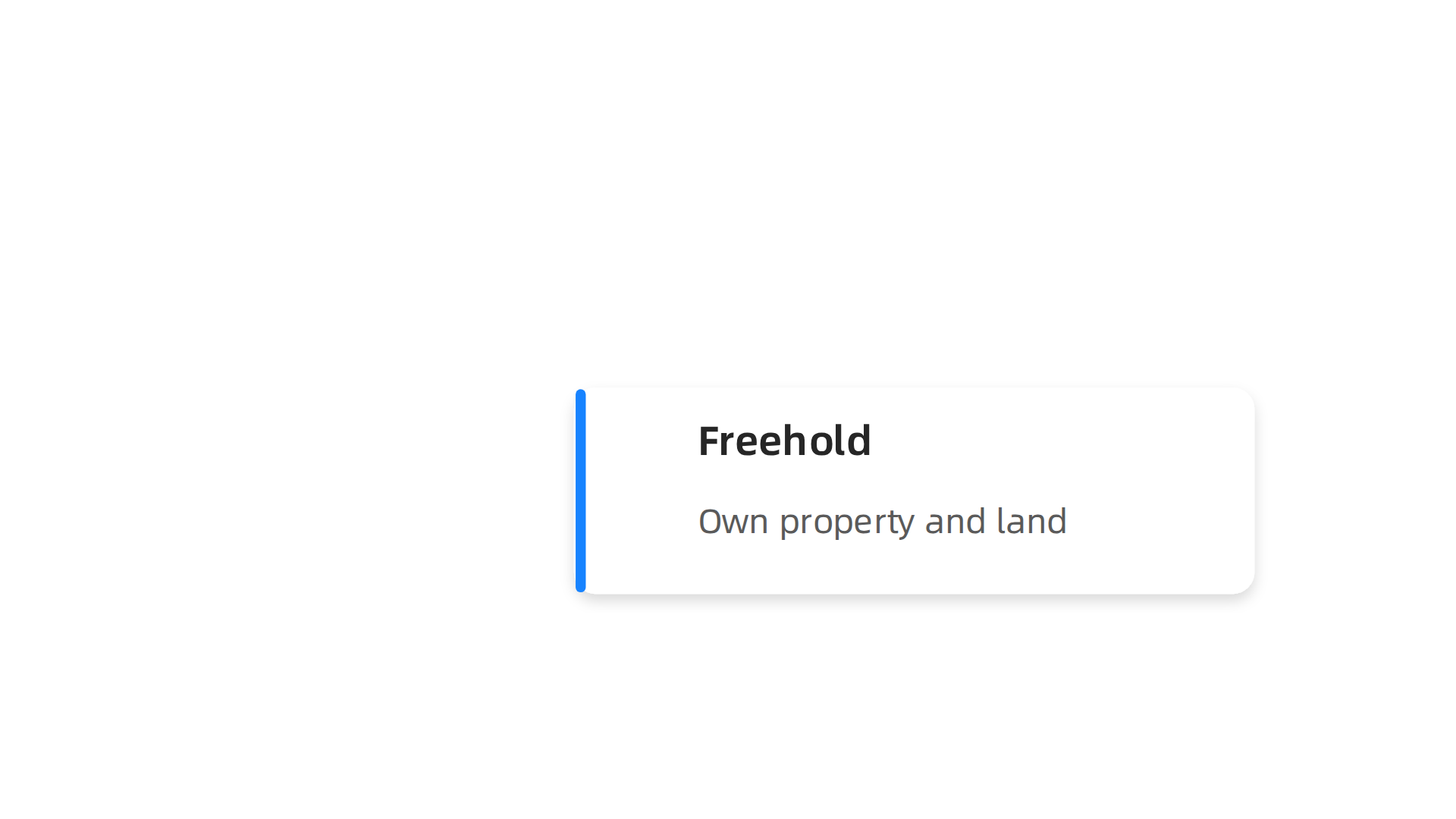
Freehold means you own both the property and the land it sits on. You can sell it, rent it out, or pass it to your children. No time limit. This is only possible in specific areas called "freehold zones."
Leasehold gives you the right to use the property for a set period, usually up to 99 years. You do not own the land. Most foreign buyers choose freehold because of the full control it offers.
As a foreigner, you can only buy in designated freehold areas. These include popular spots like Dubai Marina, Downtown Dubai, Palm Jumeirah, Jumeirah Village Circle, and Dubai Hills Estate.
This list of freehold areas in Dubai is a great starting point to see if your target neighborhood qualifies.
Who Governs the Process?
Two main bodies oversee all property transactions in Dubai. The Dubai Land Department (DLD) handles registration, title deeds, and the 4% transfer fee. The Real Estate Regulatory Authority (RERA) makes sure developers follow the rules.
Before you buy any off-plan property, you must check that the developer is registered with RERA and that your money goes into a protected escrow account. This keeps your funds safe until the project delivers.
The Golden Visa Opportunity
One of the biggest legal perks of buying property in Dubai is the chance to get a long-term visa.
If you buy a property worth AED 2 million or more, you may qualify for a renewable 10-year Golden Visa. This visa covers your spouse and children. It also lets you live, work, and study in the UAE without needing a sponsor.
In 2026, the rules got even better. There is now no fixed minimum value for sole owners applying for a 2-year investor visa. This change, reported in the 2026 legal framework for foreigners buying property, means entry-level properties in communities like JVC may qualify. But the Golden Visa still requires AED 2 million.
Understanding these rules early helps you plan your investment around the visa benefits you want.
Would you like to see how this works with your specific goals and budget? You can connect with a local expert for a FREE Dubai Real Estate Consultation. They can walk you through the legal steps, visa options, and best communities for your situation.
Engage a Trusted Real Estate Agent
You have the legal basics down. Now you need a guide who knows the market inside out. A great agent can speed up your property search Dubai and open doors you would never find on your own.
Why a RERA-Certified Agent Matters
Every real estate agent in Dubai must hold a valid RERA Broker Registration Number (BRN). This is not optional.
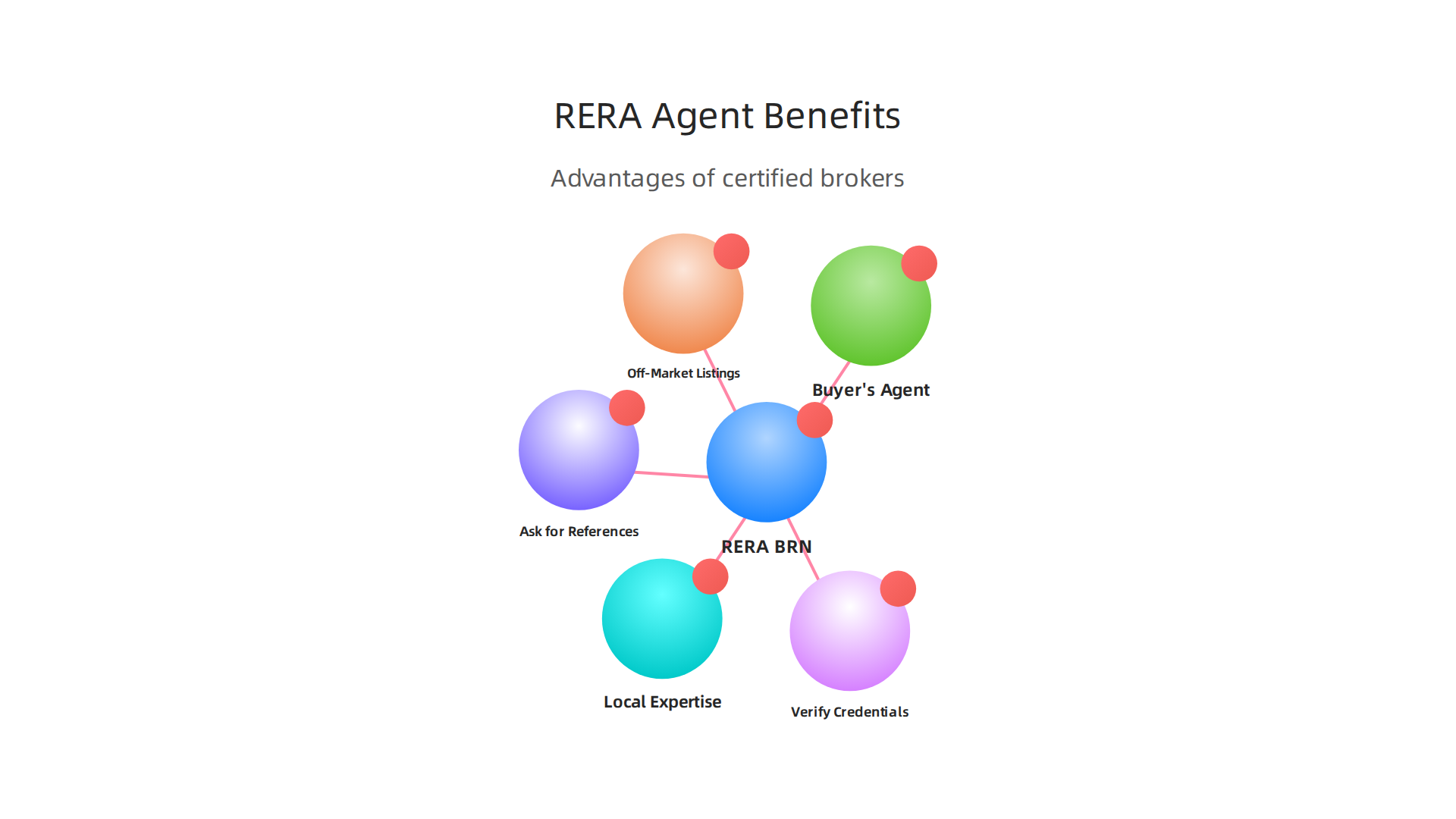
It is the law. When you work with a licensed agent, you know they have passed the Dubai Real Estate Institute exam and follow the rules set by the Dubai Land Department.
An agent with local expertise knows which buildings have good construction, which communities are rising in value, and which developers have a strong track record. They also get access to off-market listings. These are properties for sale that never appear on public websites. That alone can give you an edge over other buyers.
How to Check Credentials
Never take an agent’s word alone. Always verify. You can use the Dubai Land Department’s licensed brokers search tool to check if an agent’s BRN is active and valid.

Just enter their name or number. It takes 30 seconds.
Also ask for recent transaction references. A good agent will happily share examples of past deals with buyers in similar situations to yours. If they hesitate, that is a red flag.
Look for a Buyer’s Agent
Here is something many first-time buyers miss. In Dubai, most real estate agents work for the seller. They get paid commission when they sell a property. That means their first loyalty may not be to you.
But you can hire an agent to represent you as a buyer. This agent has a fiduciary duty to act in your best interest. They will negotiate on your behalf, point out problems with a property, and help you avoid overpaying. Finding someone who puts your interests first is worth the extra effort.
To learn more about what to watch for, read this guide on how to find a trustworthy property broker Dubai.
It walks you through the signs of a reliable agent and the scams to avoid.
With the right agent by your side, your dubai property search becomes faster, safer, and much more successful.

Evaluate Developers and Property Quality
You have a trusted agent on your side. Now it is time to focus on who actually builds the home. Developer reputation can make or break your property search Dubai. A well-known builder with a strong track record usually delivers on time and builds with quality materials. A less experienced developer might leave you waiting for years or hand over a unit with problems.
The Delivery Reality in 2026
Here is a number that surprises many buyers. According to a detailed market report, out of 71,613 forecasted units in 2026, only 34,740 are likely to be delivered. That is less than half. This fact comes from the Dubai Residential Supply & Delivery Outlook for 2025-2027.
So simply trusting a glossy brochure is not enough. You need to check a developer’s actual delivery history.
Use RERA’s Escrow System and Oqood
Dubai has strong protections for buyers. Every off-plan project must register with RERA’s escrow account system. Your payments go into a protected account. The money is only released to the developer as construction milestones are met. You should also confirm the developer is registered on Oqood, the off-plan property registration system. If a developer is not listed, walk away.
To learn more about which developers have a solid track record, read this guide on how to choose the best property developers in Dubai for high returns. It explains what to look for and which names consistently deliver.
Visit Show Units and Check Quality
Never buy sight unseen. Visit a completed project from the same developer. Look at the finishing quality. Talk to residents if you can. Also check third-party quality reports online. A few hours of research now can save you years of regret later.
If you want help evaluating a specific developer or property, get a free consultation with Ayaz Salman. He can walk you through the latest market data and point you toward reliable builders. Taking these steps now makes your dubai property search much safer and more rewarding.
Secure Financing and Payment Plans
You have found a property you love. Now comes the real question. Can you afford it, and how will you pay for it? Getting your finances sorted early is one of the smartest moves you can make during your property search Dubai. It gives you a clear budget and makes your offer stronger when you find the right home.
Get Mortgage Pre Approval First
Before you start viewing dozens of properties, talk to a bank. Mortgage pre approval tells you exactly how much you can borrow. It also shows sellers you are serious. Banks in the UAE will ask for your salary certificate, six months of bank statements, and a property valuation. If you are self employed, they need your trade license and audited financials. The complete guide to buying property in Dubai for investors walks you through every document you will need.
For expats, the down payment is usually 20% for properties up to AED 5 million. Above that, you need at least 30%. If you are buying as an investment to rent out, the deposit jumps to around 40%.
In 2026, fixed mortgage rates have dropped to as low as 3.75%. That is a great time to lock in your rate. As reported in the Dubai homebuyers rush to lock in fixed rate mortgages as rates drop to 3.75%, major UAE banks offer one year fixed rates around 3.75% and three year fixed rates near 3.95%.
Salaried residents who transfer their salary to the lender get the best deals.
Look at Post Handover Payment Plans
Here is something many first time buyers miss. Many developers offer payment plans that stretch beyond handover. You might pay 50% during construction and the rest over two or three years after you move in. This makes off plan purchases much more accessible than ready properties, where you need the full mortgage right away.
When you compare options, do not just look at the interest rate. Check the processing fees, early settlement penalties, and mortgage registration fees. These can add 1% to 2% of the loan amount. Knowing the full picture saves you from surprises later.
Getting your financing ready early makes your dubai property search smoother and more confident. You will know your limit, move faster on good deals, and sleep better at night.
Conduct Due Diligence and Property Inspections
You have sorted your financing. Now comes a step that too many buyers skip. You need to check the property itself. Due diligence and inspections protect you from nasty surprises.

A smart property search Dubai always includes a deep look under the hood before you sign anything.
For Ready Properties: Check Everything
With a ready home, do not rely on what the seller or agent tells you. Hire an independent inspector to check the plumbing, electrical systems, air conditioning, and structure. A small fee now can save you thousands later.
You also need to run some legal checks. Ask for a title deed search through the Dubai Land Department. This confirms the seller really owns the property. An encumbrance check shows if there are any outstanding loans or mortgages on it. If the seller still owes the bank, you need to know before you pay. Service charge history matters too. Some buildings have high fees or unpaid dues that could become your problem. Always verify the registration type and confirm the property sits in an approved freehold zone if you are a foreign buyer. As explained in the Dubai property ownership explained (2026) guide, freehold means full ownership registered with the DLD, including rights to resell and inherit. But not every area is freehold, so double check.
For Off Plan Properties: Track Progress
If you are buying off plan, due diligence looks different. You cannot inspect a finished unit. Instead, check the developer’s track record. Have they completed past projects on time? Ask for the latest construction milestones and photos. Some developers let you visit the site to see physical progress. If the project is delayed, you need to know why. Our guide on how to choose the best property developers in Dubai for high returns walks you through what to look for in a builder before you commit.
Verifying seller ownership rights is just as important for off plan. Make sure the developer has all the necessary approvals from the Dubai Land Department and that your payments go into an escrow account. That way your money is protected.
Getting these checks done gives you confidence. You will know your investment is safe and the property is worth the price. If you want to make sure you are not missing anything, get expert advice. Connect with Ayaz Salman for a FREE Dubai Real Estate Consultation. He can help you verify documents, check developer history, and avoid costly mistakes.
Navigate the Closing Process Smoothly
You have done your checks. Now it is time to close the deal. The closing process in Dubai follows a clear set of steps. If you understand them ahead of time, you will feel calm and prepared.
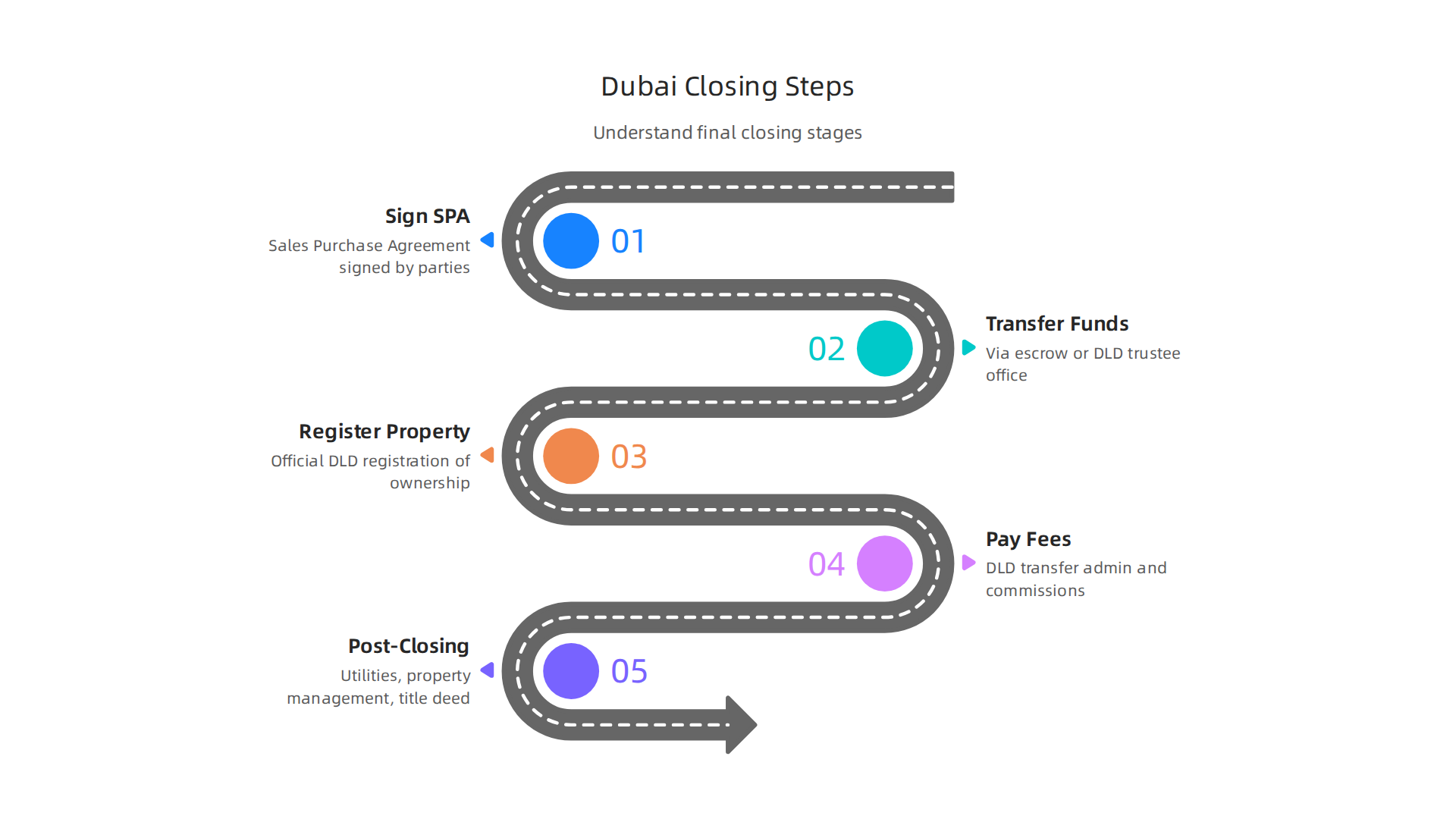
First, you and the seller sign the Sales Purchase Agreement (SPA). This legal document spells out the final price, payment schedule, and handover date. A real estate agent or lawyer usually helps with this. Once signed, you need to transfer the funds. Most buyers use an escrow account or a bank transfer done through the Dubai Land Department (DLD) trustee office. This keeps your money safe until ownership is registered.
After payment, you register the property with the DLD. This is the official step that makes you the legal owner. The DLD charges a transfer fee of 4 percent of the property value. On top of that, expect admin fees of around AED 4,000 and agent commission if you used one. If you took a mortgage, there is also a mortgage registration fee of about 0.25 percent of the loan amount. Knowing these costs upfront helps you budget. The guide on mortgages in the UAE for expats lists these fees clearly.
Once the title deed is in your name, you are not done yet. You still need to handle post-closing steps. Set up utility connections for electricity and water. If you plan to rent the property out, arrange property management. And make sure the title deed is updated with your ownership details at the DLD.
Taking these closing steps one at a time makes the process smooth. If you want to see the full picture from start to finish, check out our complete guide to buying property in Dubai. It covers everything you need to know before you sign.
Summary
This guide gives a step-by-step framework to make your Dubai property search efficient and low-risk, whether you want a family home, rental income, or capital growth. It explains how to define clear goals, build a realistic budget that includes taxes, fees and service charges, and use those criteria to filter listings. You will learn how to compare communities by price-per-square-foot, rental yield and supply pipelines, and why tracking developer delivery history matters in 2026. The guide covers the legal basics for foreign buyers (freehold vs leasehold), Golden Visa thresholds, and which authorities oversee transactions. It shows how to engage a RERA‑certified buyer’s agent, verify credentials, and evaluate developers using escrow and Oqood checks. Practical financing advice covers mortgage pre-approval, typical down payments for expats, and post-handover payment plans. Finally, it walks you through due diligence, inspections, and the closing steps so you can buy with confidence and avoid common pitfalls.