Introduction
Dubai’s real estate market keeps grabbing global attention. Why? The city sits at a strategic crossroads, offers major tax advantages, and has world-class infrastructure that keeps getting better. For many people around the world, real estate investing in Dubai feels like a smart move. According to a recent Dubai Housing Market 2026 analysis, growth continues to be supported by population increases and strong end-user demand.
But here is the thing. If you are thinking about buying in Dubai, you have probably noticed the flood of information out there. It can feel overwhelming. One article says prices are soaring. Another warns about market shifts. Sorting through all the dubai property news, trying to understand regulations, figuring out what ROI to expect, and worrying about market volatility can stop you before you even start.

So whether you want to buy real estate in Dubai for the first time or you are a seasoned investor looking at new dubai apartments for sale, having clear, trustworthy guidance makes all the difference.
That is exactly what this guide is for. We put together a clear, evidence-based overview of the Dubai property market in 2026. This article is part of a larger complete guide to buying property in Dubai for investors that walks you through everything from market trends to closing the deal.
No fluff. No hype. Just the numbers, trends, and practical steps you need to make informed decisions.
If you would like personal help tailored to your situation, feel free to connect with Ayaz Salman for a FREE Dubai Real Estate Consultation. He can answer your questions and point you in the right direction.
Let us start with a look at where the market stands right now.
Dubai Real Estate Market Overview in 2026
So where does the market stand right now? The numbers tell a clear story. Dubai’s real estate market is on a strong footing in 2026.
Transaction volumes have hit new highs. The first quarter of 2026 set an all-time record with over AED 252 billion in total sales. That is a 31% jump compared to the same quarter last year, according to the Dubai real estate Q1 2026 record. Buyers are active across both off-plan and ready properties.
Price trends show steady but moderating growth. Apartment prices have climbed about 15% year-on-year. Villa prices have done even better, rising nearly 18% in the same period, based on the Dubai residential property price trends 2026 report. Villas continue to outperform because supply is limited and people want more space.
What keeps this momentum going? Smart government policies. Long-term residency visas, including the Golden Visa, make it easy for foreigners to buy real estate in Dubai and stay long term. The 100% foreign ownership rule in designated areas removes old barriers. These moves build confidence among global investors.
New Dubai apartments for sale are flooding the market, especially in developing areas. But supply concerns are often overstated. Actual handovers have been lower than headline launch numbers, which helps keep prices stable.
If you are thinking about real estate investing Dubai, the current conditions look favorable. Demand is driven by real end-users, not just speculators. The Expo 2020 legacy has left better infrastructure and global awareness.
For a detailed walkthrough of the buying process, read this guide on buying property in Dubai for strong returns and tax benefits. It covers everything from finding the right property to closing the deal.
Now let us look at the key areas where prices are rising fastest and where you might find the best value.
Key Drivers of the Dubai Property Market
So what is really pushing the market forward? Three big forces are at work right now.
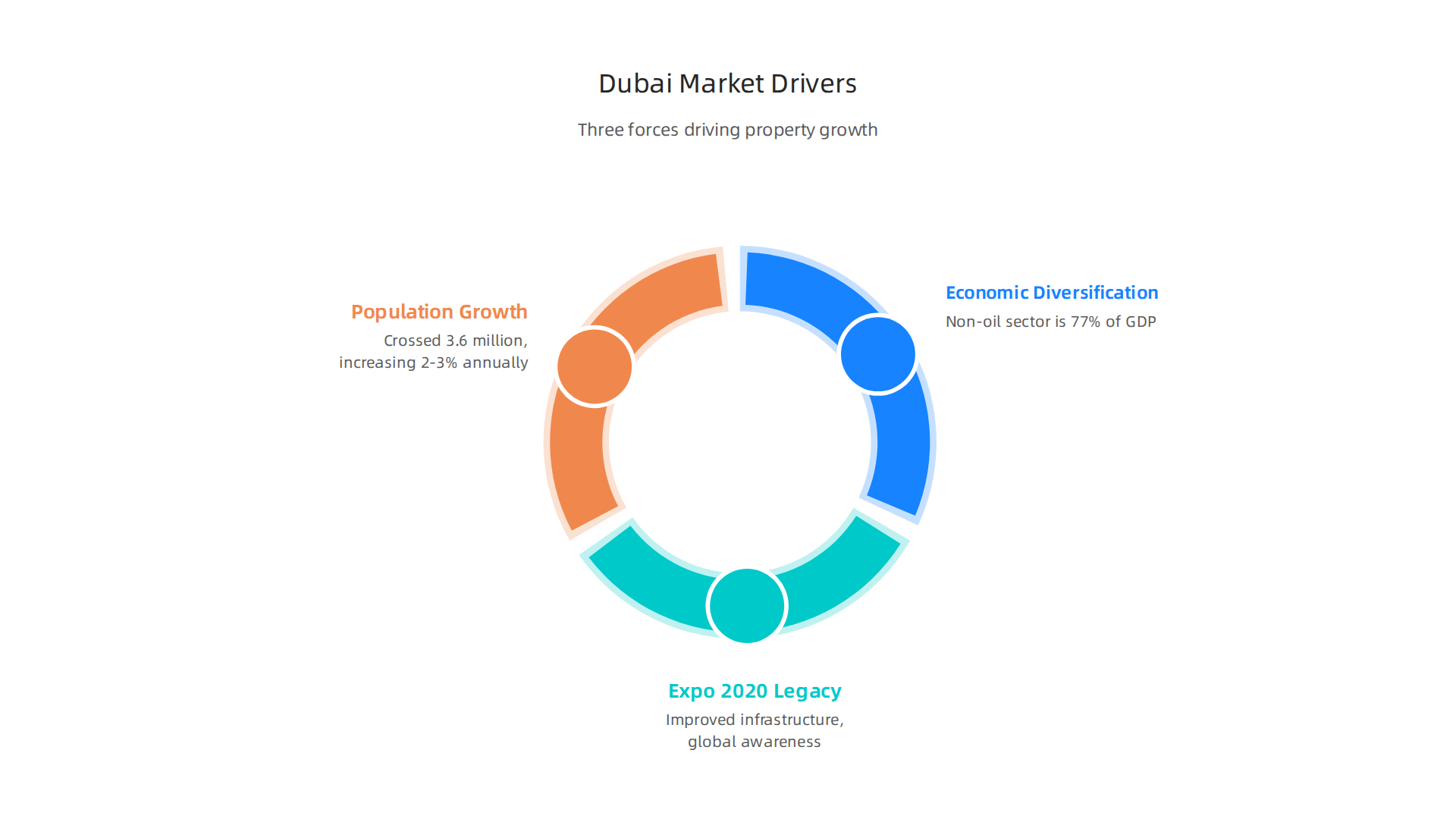
Economic diversification is the first driver. Dubai has worked hard to move away from oil money. Today, tourism, technology, and finance make up most of the economy. The non-oil sector now accounts for over 77% of the UAE’s GDP. That is a huge shift. It means the economy does not crash every time oil prices drop. International investors feel safer putting money into real estate in dubai because the foundation is broader. According to the UAE Economy Set for 5% Growth in 2026: Key Implications report, non-oil GDP is expected to grow around 5.3% in 2026, driven by strong domestic demand and continued foreign investment.
The Expo 2020 legacy is the second force. Even though the event ended a few years ago, its benefits keep rolling in. New roads, metro extensions, and public spaces have made the city more connected. Dubai is now on the global map for business and tourism like never before. More visitors and companies mean more demand for property. If you want to buy real estate in dubai, the improved infrastructure makes many areas more attractive than they were five years ago. This has opened up opportunities for new dubai apartments for sale in developing districts that were previously harder to reach.
Population growth is the third key driver. Dubai’s population recently crossed 3.6 million. Skilled expatriates keep arriving, drawn by the lifestyle, safety, and tax benefits. More people means more need for housing. That is why rental demand stays high and why people keep looking at real estate investing dubai as a smart move. The government’s long-term visa programs make it even easier for professionals to settle down and become homeowners.
If you are considering making a move, connecting with an expert can save you time. Reach out for a FREE Dubai Real Estate Consultation to discuss your goals and find the right opportunity.
Economic Growth and Diversification
Dubai has done something not many cities can claim. It has built an economy that does not depend on oil.
Today, the non-oil sector makes up over 77% of the UAE’s GDP. Sectors like real estate, tourism, financial services, and logistics are leading the charge. According to the UAE non-oil business growth picks up in May report, non-oil GDP grew by 6.8% in 2025, outpacing the overall economy. That is a clear sign that diversification is working.
The government is not slowing down either. The Dubai Economic Agenda D33 is a bold plan to double the size of the city’s economy by 2033. It focuses on boosting trade, attracting foreign investment, and expanding into new industries. For anyone looking at real estate in dubai, this is great news. A growing economy supports property values and keeps rental demand strong.
If you want practical advice on making your first move, check out this step by step guide for buying real estate in Dubai. It walks you through the whole process.
Population and Demographic Trends
Here is another reason real estate in Dubai stays in high demand. The city is growing fast.
Dubai’s population passed 3.6 million in 2025 and keeps climbing at 2 to 3 percent each year. That is a lot of new people needing homes. According to the UAE Economy Set for 5% Growth in 2026 Key Implications report, this population boom is a major driver of property demand.
What makes this special? Over 85 percent of residents are expatriates. Many work in high-earning jobs like finance, tech, and logistics.

These professionals actively look for quality housing, from new dubai apartments for sale to family villas.
The median age is around 30 years old. That young demographic profile creates strong demand for both apartments and family-sized homes. Young professionals rent first, then buy. Growing families need extra space.
For anyone thinking about real estate investing dubai, this trend matters. A young, growing, and wealthy population means steady demand for years to come.
Thinking about making your own move? Connect with Ayaz Salman for a FREE Dubai Real Estate Consultation and get personalized advice for your situation.
Types of Properties and Investment Options
Now that you see why demand keeps growing, let’s look at what you can actually buy. The real estate in Dubai market offers several paths, and each suits a different goal.
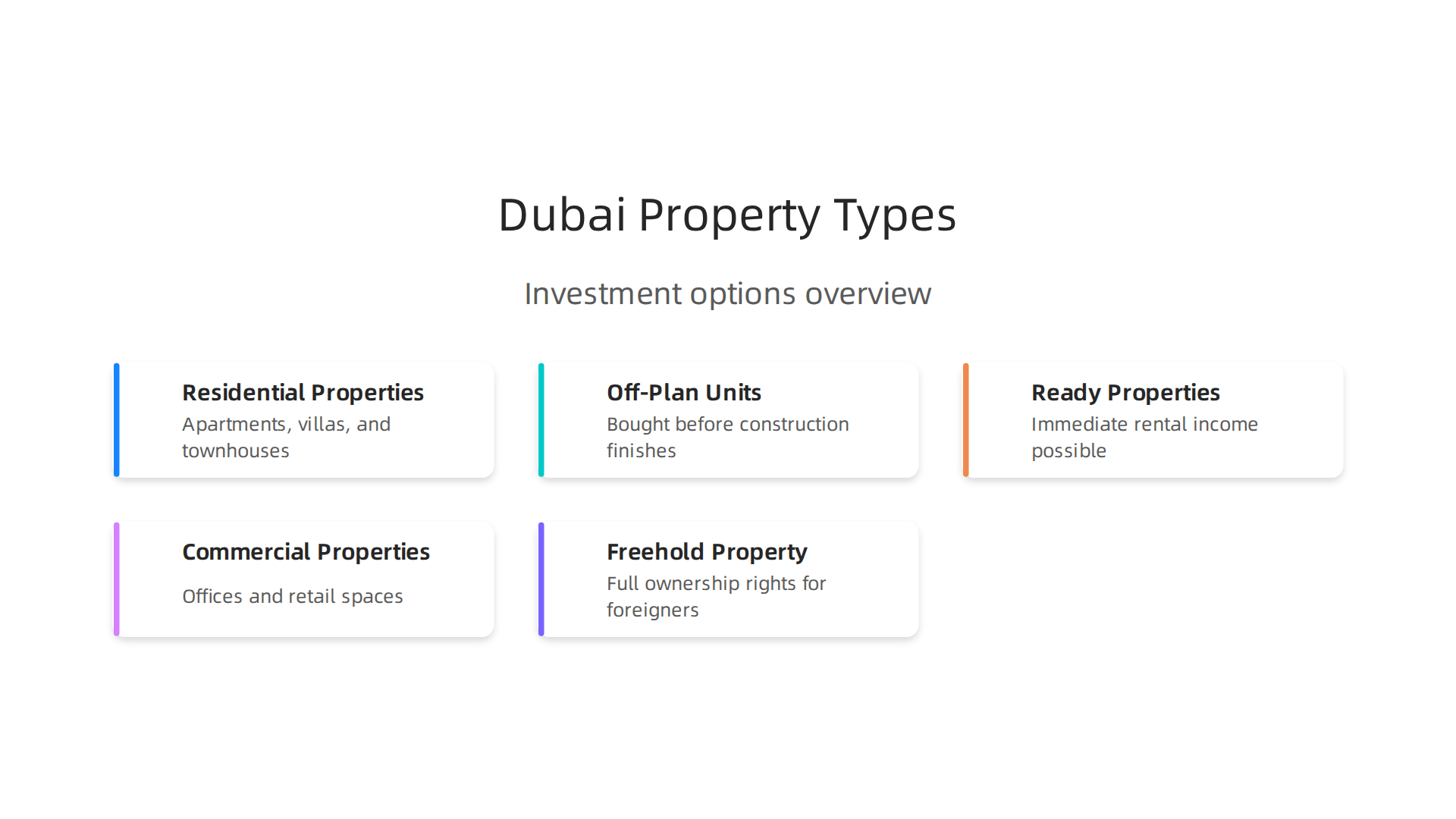
Residential properties like apartments, villas, and townhouses make up the biggest slice. Most investors start here because demand from young professionals and families stays strong. You can choose between off-plan units bought before construction finishes, or ready properties you can move into right away. Off-plan often means lower entry prices and flexible payment plans, but you wait for delivery. Ready properties give you immediate rental income. The best off-plan projects in Dubai list shows popular new launches with strong potential.
Commercial properties like offices and retail spaces offer higher returns but need more capital and come with longer vacancy risk.
Foreign buyers can own freehold property in designated areas. That means full ownership rights, no lease, and no time limit. The Dubai Land Department protects buyers through strict registration rules.
Your choice depends on your timeline and risk comfort. Off-plan offers bigger potential gains but more uncertainty. Ready properties bring steady cash flow from day one. Either way, understanding these options helps you make a smarter move.
If you are still unsure which type fits your budget and goals, check out this guide on buying property in Dubai in 2026 for tax-free rental yields and visa benefits. It breaks down what each category can do for you.
Residential: Apartments, Villas, and Townhouses
Let us zoom in on the most popular slice of the market. Apartments dominate the skyline and the sales charts. High-rise districts like Dubai Marina, Downtown, and Business Bay are packed with studio, one-bedroom, and two-bedroom units. These are the go-to for young professionals and investors chasing rental income. The huge range of off-plan and ready units means plenty of choices for anyone wanting to find new Dubai apartments for sale, as shown by the many off-plan projects in Dubai available across all budgets.
Villas and townhouses sit at the other end of the spectrum. Communities like Arabian Ranches, Emirates Hills, and Dubai Hills Estate attract families and long-term buyers. These properties often hold their value better over time. They also offer more space and privacy, which keeps demand high among expat families.
Rental yields vary between these categories. Apartments generally deliver 6 to 8 percent returns in prime locations. Villas and townhouses yield 4 to 6 percent, but they often come with stronger capital appreciation. The latest Dubai property news shows that both categories remain solid for anyone looking to invest in real estate in Dubai.
To get a clearer picture of what your investment might earn, you can check this Dubai property investment 2026 guide for real numbers on what different properties can return.
If you are ready to explore your options with professional help, connect with a local expert through a FREE Dubai Real Estate Consultation to discuss your goals and find the right property for you.
Commercial and Off-Plan Investments
Beyond apartments and villas, there is another path for anyone wanting to invest in real estate in Dubai. Commercial properties such as offices and retail spaces can offer higher rental yields than residential units. Some areas see returns of 8 to 10 percent. But there is a trade-off. Commercial leases tend to be longer, and if a tenant leaves, the property can sit empty for months while you search for a new one. That vacancy risk is something to factor into your planning.
Off-plan investments work differently. You buy a unit before construction finishes at a price below the expected market value. If the project goes well, your property can gain value during the build. This is one of the smartest ways to make capital gains from new Dubai apartments for sale. The bottom line? You are locking in today’s price for tomorrow’s market.
But not every off-plan launch is a good deal. Dubai property news continues to stress that developer track record matters more than ever. Stick with builders who have a history of on-time delivery and solid quality. Major names like Emaar, DAMAC, and Sobha have strong reputations. For a deeper look at how to evaluate developers, check out this guide on how to choose the best property developers in Dubai for high returns.
A reliable source notes that the best developer reputation is defined by sales performance, build quality, and consistent on-time delivery, as shown in this 2026 list of top real estate developers in Dubai. Before you sign anything, confirm the project is registered with the Dubai Land Department. That simple step protects your money.
Off-plan can be a powerful tool for real estate investing in Dubai, but only if you do your homework first.
Legal Considerations for Foreign Buyers
Before you sign anything, you need to understand the legal side. The good news is that Dubai actively welcomes foreign investors. Since 2002, expats can own freehold property in over 100 designated zones. These include popular areas like Dubai Marina, Downtown Dubai, Palm Jumeirah, and Jumeirah Village Circle. You get full ownership rights and can even pass the property to your heirs.
The buying process is straightforward but requires the right documents. You will need a valid passport, proof of funds, and a No Objection Certificate (NOC) from the developer.
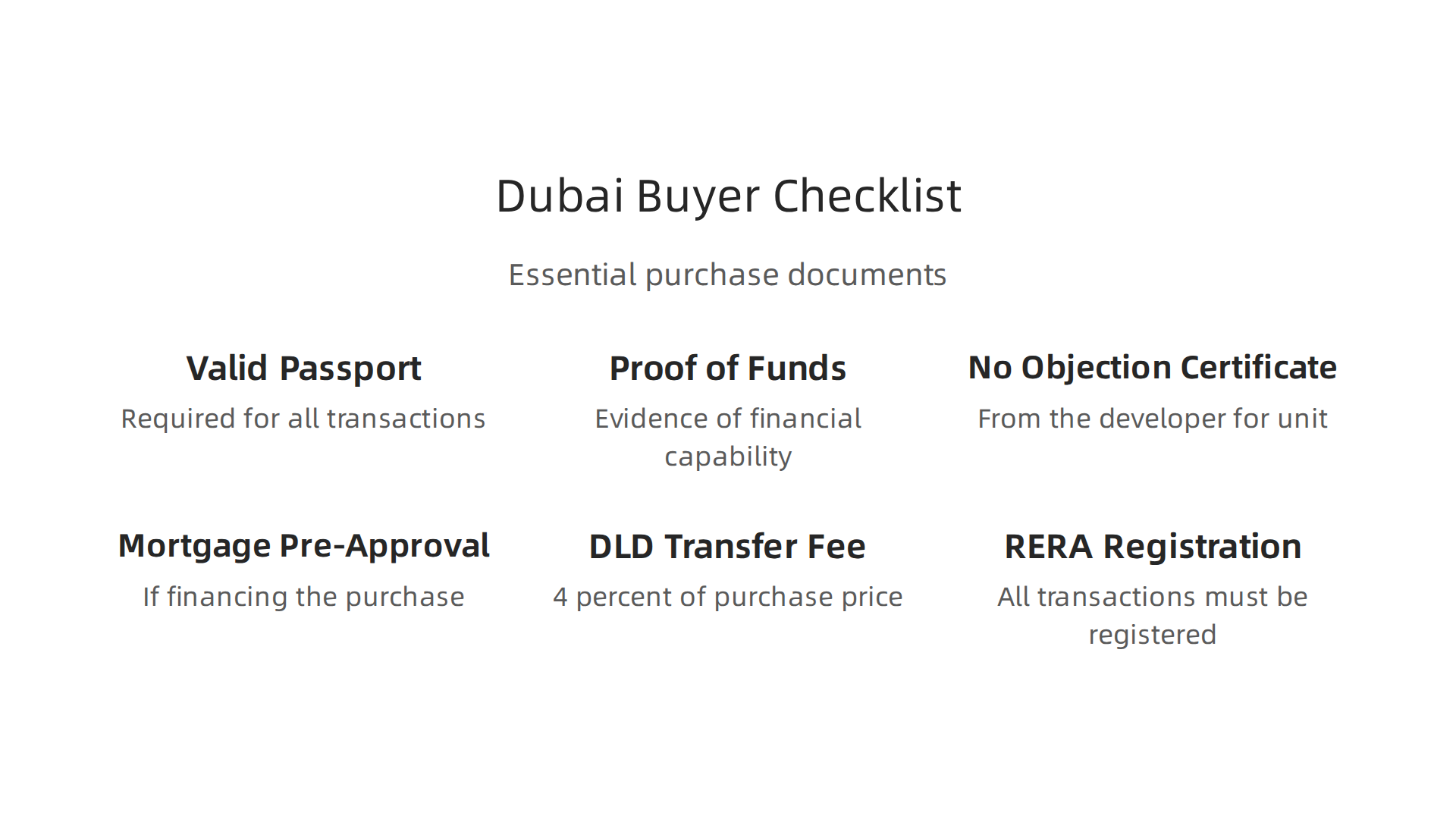
The NOC confirms the developer has no outstanding dues on the unit. If you are financing the purchase, you may also need a mortgage pre-approval.
All transactions go through the Dubai Land Department (DLD). You pay a transfer fee of 4 percent of the purchase price. The process also involves RERA (Real Estate Regulatory Authority) registration. For a full walkthrough of each step, read this step-by-step guide to buying real estate in Dubai.
A reliable source confirms that foreign investors can buy freehold property in specific areas like Dubai Marina and Downtown Dubai, and the required documents include a passport and NOC.
One more thing. In 2026, the rules for the investor visa changed. If you are a sole owner, there is no longer a fixed AED 750,000 minimum for a 2-year renewable visa. Even lower-value properties may now qualify, subject to DLD approval.
If you need help navigating these rules, get a FREE Dubai Real Estate Consultation.
Freehold Zones and Ownership Rights
Dubai has over 100 designated freehold areas where foreigners can buy property. This means you are not limited to just a few spots. Popular freehold zones include Dubai Marina, Downtown Dubai, Palm Jumeirah, and Jumeirah Lakes Towers (JLT). Each offers a different lifestyle and investment potential.
When you buy in a freehold zone, you get a freehold title deed or a 99-year renewable leasehold. Either way, you have strong ownership rights. You can sell the property whenever you want. You can lease it to tenants and collect rental income. You can also use it as collateral for a mortgage. There are no special restrictions on these activities.
The list of approved freehold areas is set by the Ruler of Dubai and may expand over time. A legal expert explains that foreigners can buy in designated areas like Dubai Marina and Downtown Dubai with full ownership rights, including inheritance. This makes it safe to plan for the long term.
If you are deciding between two of the most popular zones, check out this comparison of properties for sale in Downtown Dubai vs Dubai Marina for 2026 returns and lifestyle factors. It helps you pick the right match for your goals.
Residency Visas via Property
One big reason people look at real estate in Dubai is how it can open the door to long-term living. Buying a property can actually help you get a residency visa, which is a huge bonus if you want to settle here.
For a 2-year investor visa, you used to need a property worth at least AED 750,000. But here is some good news. Recent 2026 rule changes mean that sole owners of lower-value properties may also qualify. The key is meeting the Dubai Land Department’s eligibility criteria. You’ll need to provide proof of ownership, valid health insurance, and evidence of steady income. Make sure you have all the required documents for Dubai property buyers ready to avoid delays.
If you are thinking bigger, the Golden Visa offers a 10-year renewable residence. This one requires a property investment of AED 2 million or more. It is a fantastic option for serious investors who want stability and the ability to sponsor family members.
Want to learn the full process? Check out this detailed guide on buying property in Dubai for tax-free rental yields and visa benefits. It walks you through exactly how to combine your investment with residency.
Not sure which visa fits your situation best? Get personalized advice from an expert. FREE Dubai Real Estate Consultation – Connect with Ayaz Salman to discuss your goals and find the right path forward.
How to Choose a Reputable Developer and Property
You have probably scrolled through dozens of listings and felt stuck. Every project looks shiny and promising. But here is the truth: not every developer delivers on time or builds what they promise.
So how do you pick the right one?
Start with the developer’s track record. In 2026, names like Emaar, Damac, Sobha Realty, and Ellington stand at the top of the market. According to the Engel & Völkers report on the top 10 real estate developers in Dubai, these companies have billions in sales and a history of completing projects on schedule. If a developer has delivered multiple communities before, you can trust them more.
Next, check for RERA registration. In Dubai, every off-plan project must be registered with the Real Estate Regulatory Agency. This protects your money because developers must use an escrow account. Your payments go toward construction, not marketing or other spends. Always confirm this before signing anything.
You should also do your own digging. Read online reviews. Look up financial health reports. Visit the actual project site and tour a model apartment if one exists. Pictures online can be misleading. Seeing the space in person gives you a real feel for size, layout, and build quality.
Finally, work with a registered real estate agent. A good agent knows which developers have strong reputations and which ones to avoid. They help you compare new Dubai apartments for sale across different communities and negotiate better payment terms.
If you want to explore this further, check out this guide on the best property developers in Dubai for high returns.
And remember, you do not have to figure this out alone. Whether you are buying your first home or growing an investment portfolio, getting expert advice early saves time and money. Reach out for a FREE Dubai Real Estate Consultation today and get clear guidance from someone who knows the market.
Managing Your Property from Overseas
So you picked a solid developer and closed on your Dubai apartment. Now what? If you live in another country, managing a rental property from thousands of miles away can feel overwhelming. But the truth is you have better options than you think.

The easiest route is hiring a full-service property management company. These firms handle everything leasing, tenant screening, maintenance, compliance, and rent collection. They act as your on-the-ground team so you never have to worry about a late-night plumbing issue or a lease renewal. According to these helpful property management tips for overseas investors, the best companies even guarantee tenants and handle legal disputes if they come up.
What does this service cost? Expect to pay between 8% and 12% of your annual rental income. That might sound like a lot, but it is fully tax deductible against your rental earnings. And for the peace of mind it gives you, it is often worth every dirham. Many management firms also offer tiered packages like Silver or Gold so you only pay for the services you need.
Technology makes remote ownership even easier. In 2026, most reputable property managers give you access to online portals and mobile apps. You can log in anytime to see financial reports, view maintenance updates, and track your rental income in real time. No more waiting for monthly paper statements or wondering if your tenant paid on time.
If you are still early in your research journey, this step-by-step framework for your property search walks you through every stage of the buying process including planning for property management from day one.
The bottom line: living overseas does not mean you have to struggle with your investment. The right team and the right tools turn your Dubai property into a truly passive income stream.
Summary
This guide gives a clear, practical view of Dubai’s real estate market in 2026, showing why the city remains attractive for international buyers and investors. It summarizes recent market strength — record transaction volumes and continued apartment and villa price gains — and explains the three main drivers: economic diversification, Expo 2020 infrastructure legacy, and population growth. The article walks through what you can buy (apartments, villas, townhouses, commercial and off‑plan), compares off‑plan and ready options, and details expected rental yields and capital appreciation. It also covers legal steps for foreign buyers, freehold ownership zones, residency and investor visas, how to pick reputable developers, and practical tips for managing property from abroad. Read it to understand risks, costs (including DLD transfer fees), and the concrete steps you need to research, buy, and operate a Dubai property with confidence.